Updated 16 Oct 2026 · 31 offers checked
Where to rent an H100 PCIe at the cheapest price
We read every H100 PCIe offer we could find on the provider's own page, kept the PCIe, NVL and SXM variants apart, and priced what each hour includes, what a month costs and the point at which buying the card would pay for itself.
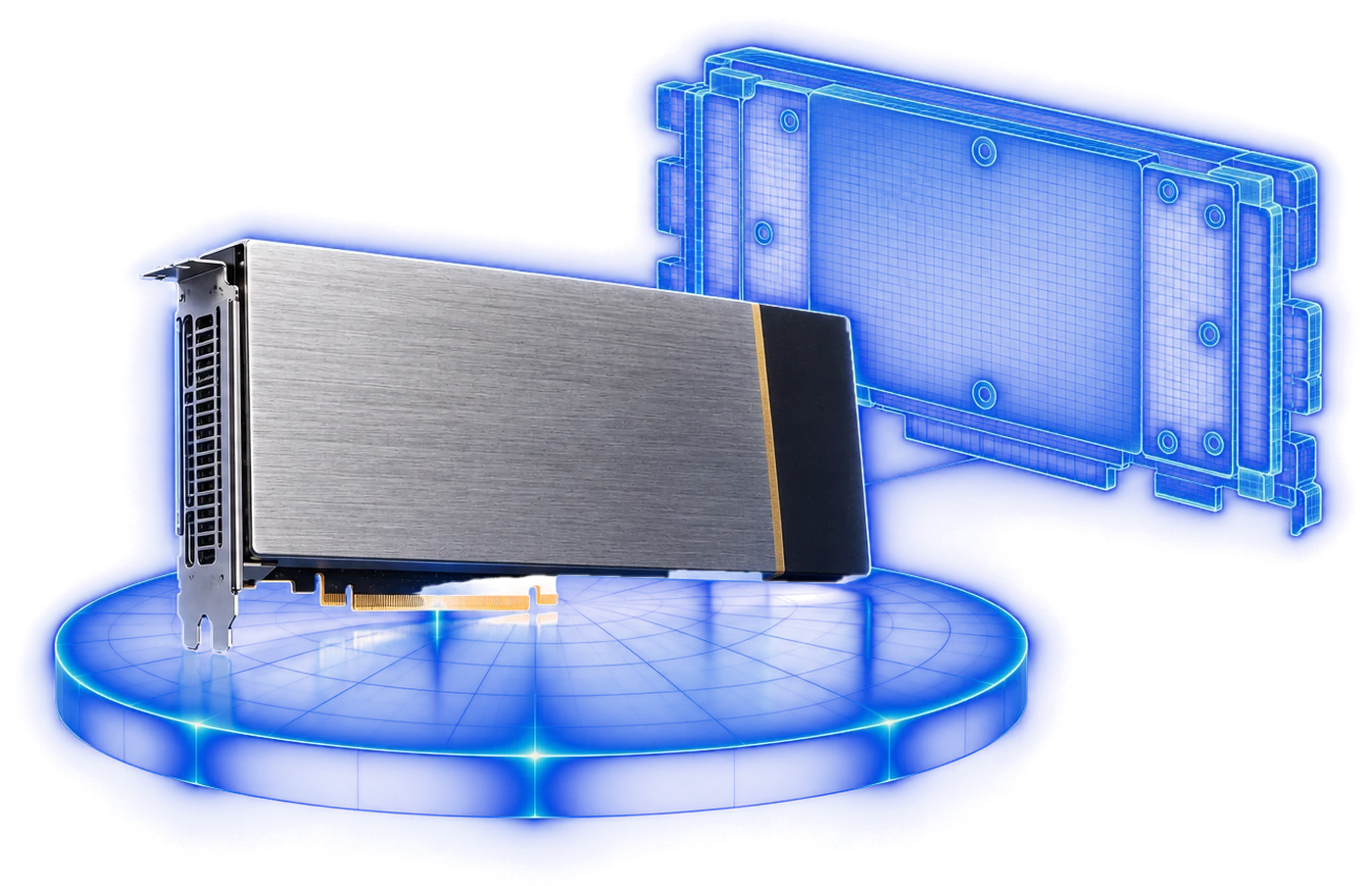
The short answer, 16 Oct 2026
- $1.35/hrCheapest on-demand H100 PCIe. GPUBank at $1.35 an hour, billed per second, with 16 vCPU, 188 GB of RAM, a 1 TB NVMe disk, a public IPv4 address and all traffic in the price; a week or a month reserved costs $1.081. The next managed offers we could read at source were Beam from $1.83, Civo at $2.49 and Hyperstack at $2.50234.
- $0.81/hrCheapest interruptible hour. GPUBank's interruptible tier at $0.81 was the lowest rate we could actually book on 16 October, with five minutes of notice and the machine stopped rather than deleted1. Vast.ai bids have gone lower, down to a two-card listing at $0.67 per GPU on 15 October, but its H100 PCIe page showed no offers at all the next day56.
- $1.98/hrCheapest marketplace list price. GPU.ai at $1.98 and Runpod Community Cloud at $1.99, both billed per second on partner or peer hosts with the disk billed on top, but both shown out of stock on 15 October78. The Vast.ai hosts tracked at about $2.00 that day had gone by the next morning86.
The H100 PCIe is the cheapest way to rent 80 GB of Hopper memory on a single card, and that is why it is sold one GPU at a time by so many specialised clouds. It is also the variant that price lists describe most loosely. A row that says only 'H100' can mean this PCIe card, the 94 GB H100 NVL or an SXM module inside an eight-GPU HGX server, three products with different memory, bandwidth and throughput, and a price comparison that mixes them compares nothing. On this page every row says which variant it is, and where the provider does not say, we say that too.
The posted prices for an H100 PCIe hour ran from $0.81 to $3.50 at managed and marketplace providers when we checked on 15 and 16 October 2026, and the spread is mostly about what the hour buys rather than the silicon. Some prices cover the GPU alone, some include a full machine with disk, an IP address and traffic, some can be taken back with a few minutes of notice, and some require a three-year commitment. Stock was thin: Runpod, Lambda, GPU.ai and Oblivus were all shown out of stock, and Vast.ai's own page listed no offers on 16 October876.
GPUBank publishes this page and rents the H100 PCIe itself, so read our own entry with that in mind. It is measured on the same terms as every other offer, and the text says plainly where it loses: interruptible marketplace bids have undercut it, its own H100 SXM often costs less per finished job, and its payment runs only on crypto top-ups for now. Prices were read on the provider's page unless a row says it comes from an aggregator or from a provider's dated snapshot.
01 / Three H100s, one name
Three H100s, one name on the price list
NVIDIA sells three H100 boards and they are not interchangeable. The SXM module sits on an eight-GPU HGX board with 80 GB of HBM3 at 3.35 TB/s, up to 700 W and 900 GB/s of NVLink through NVSwitch; the NVL is a dual-slot PCIe card with 94 GB of HBM3 at 3.9 TB/s and 350 to 400 W; the PCIe card has 80 GB of HBM2e at 2.0 TB/s, 350 W and an NVLink bridge to one partner card at 600 GB/s319. In dense FP8 that is about 1,979 TFLOPS for the SXM, 1,671 for the NVL and 1,513 for the PCIe card, half the sparse figures NVIDIA prints. The PCIe card loses 40 percent of the SXM's bandwidth and half its power budget, which is why measured throughput falls by about a third, and it cannot scale past two cards on NVLink.
That is why it matters when a listing says only 'H100'. On the same Hyperstack page the on-demand row reads 'NVIDIA H100' and the spot row 'NVIDIA H100 PCIe', and a third row called 'NVIDIA H100 NVLink' is a machine of bridged PCIe cards, not the NVL47. Koyeb, HyperAI and fal.ai print 'H100' with no variant at all, and Massed Compute's 'H100 (80GB)' is the PCIe card only by elimination36373819. A buyer who compares a $2.50 unlabelled row with a $3.20 SXM row, or pays an SXM price for a PCIe card, loses about a third of the throughput. Ask the provider, or run nvidia-smi in the first minute: it reports 'NVIDIA H100 PCIe', 'NVIDIA H100 NVL' or, for the SXM, 'NVIDIA H100 80GB HBM3'.
SXM5 module on an 8-GPU HGX board
H100 SXM
Memory80 GB HBM3
Bandwidth3.35 TB/s
BF16, dense989 TFLOPS
FP8, dense1,979 TFLOPS
Board power700 W
NVLink 900 GB/s via NVSwitch; PCIe Gen5 128 GB/s
Cheapest today$1.39/hrLium (marketplace, Secaucus)
Dual-slot FHFL PCIe card, passive
H100 PCIe This page
Memory80 GB HBM2e
Bandwidth2.0 TB/s
BF16, dense756 TFLOPS
FP8, dense1,513 TFLOPS
Board power350 W
NVLink bridge to one other card, 600 GB/s; PCIe Gen5 128 GB/s
Cheapest today$1.35/hrGPUBank (managed)
Dual-slot PCIe card, air-cooled
H100 NVL
Memory94 GB HBM3
Bandwidth3.9 TB/s
BF16, dense835 TFLOPS
FP8, dense1,671 TFLOPS
Board power400 W
NVLink bridge, 600 GB/s; PCIe Gen5 128 GB/s
Cheapest today$2.59/hrRunpod Community Cloud
Tensor-core figures are dense: NVIDIA prints them with structured sparsity, and we halved them as its footnote instructs.319
Listings that do not say which H100
02 / The card
What the H100 PCIe is, and who rents it
The H100 PCIe is NVIDIA's GH100 Hopper GPU on a full-height, full-length, dual-slot PCI Express Gen5 card with a passive heatsink, built to slot into an ordinary air-cooled server. NVIDIA's product brief gives it 80 GB of HBM2e on a 5,120-bit bus at 2,000 GB/s, a total board power of 350 W, both as default and as maximum, and three NVLink bridge connectors that join two cards at 600 GB/s9. NVIDIA's datasheet lists 1,513 TFLOPS of BF16 and 3,026 TFLOPS of FP8 on the tensor cores, but those figures are shown with structured sparsity and the footnote says they are half without it, so the dense numbers that matter for most real work are about 756 and 1,513 TFLOPS; the same sheet gives 26 TFLOPS of FP64 and 51 of FP3210. The brief also sets a 200 W floor for the power limit and a boost clock of 1,755 MHz, which is why the card holds its clocks well in an ordinary air-cooled chassis9. The same datasheet calls the memory HBM3, which contradicts the product brief's HBM2e; the brief, the board partners and the bandwidth figure all point to HBM2e.
The people who rent this card are mostly doing single-GPU work where 48 GB is not enough: serving a 30B to 70B model quantised to fit one card, LoRA and QLoRA fine-tuning, notebooks and research that want FP8 and the Transformer Engine, and batch jobs that never span more than one GPU. GPUBank positions it for single-GPU training and inference on a budget, which is a fair summary1. The price range is wide because the card is sold by everything from peer-to-peer hosts to Lambda, because many listings bundle a whole machine and many others sell the GPU alone, and because demand for single Hopper cards shifts by the week while supply sits in small fleets that sell out quickly.

03 / The price ladder
How to read the H100 PCIe market
Five kinds of offer sell this card, and they are not the same product even when the price is close. Managed on-demand clouds such as GPUBank, Beam, Civo, Hyperstack, Runpod Secure Cloud and Lambda rent a fixed machine with stated vCPU, RAM and disk at one hourly price you can start and stop at will. Marketplaces such as Vast.ai, Runpod Community Cloud and GPU.ai pass through a host's own price, and the CPU, memory, disk and network around the card change from one listing to the next, with disk and bandwidth usually billed on top of the headline11. Spot or interruptible capacity is the same hardware at a discount that can be taken back.
Reserved capacity is where the terms vary most. GPUBank reserves a single card for a week or a month at $1.08, Hyperstack shows reservations 'starting from' $1.75 without stating the term, and Civo's $1.99 and Oblivus's $2.56 both require 36 months1437. Longer terms buy less than you might expect: ComputePrices listed Impossible Cloud at $2.09 per GPU-hour on 29 September, but for a whole eight-GPU server held for 12 months8. Serverless is the fifth kind: Beam bills the H100 PCIe at $0.000972 per second of GPU time, about $3.50 an hour, with CPU and memory charged separately, which suits spiky traffic and costs too much for a model that serves all day2. The comparison table keeps these groups apart, because a marketplace headline at $2.00 and a managed all-in price at $2.00 buy different things.
Managed on demandA fixed machine at one hourly price.
MarketplaceHosts set their own price; machines vary.
Spot and interruptibleCheaper hours that can be taken back.
ReservedCommitted for a term, paid either way.
ServerlessBilled by active seconds.
04 / Provider by provider
What each price buys, and what it leaves out.
The captures below were taken on 16 Oct 2026 from each provider's own H100 PCIe or pricing page, so each figure can be read next to the conditions printed beside it.
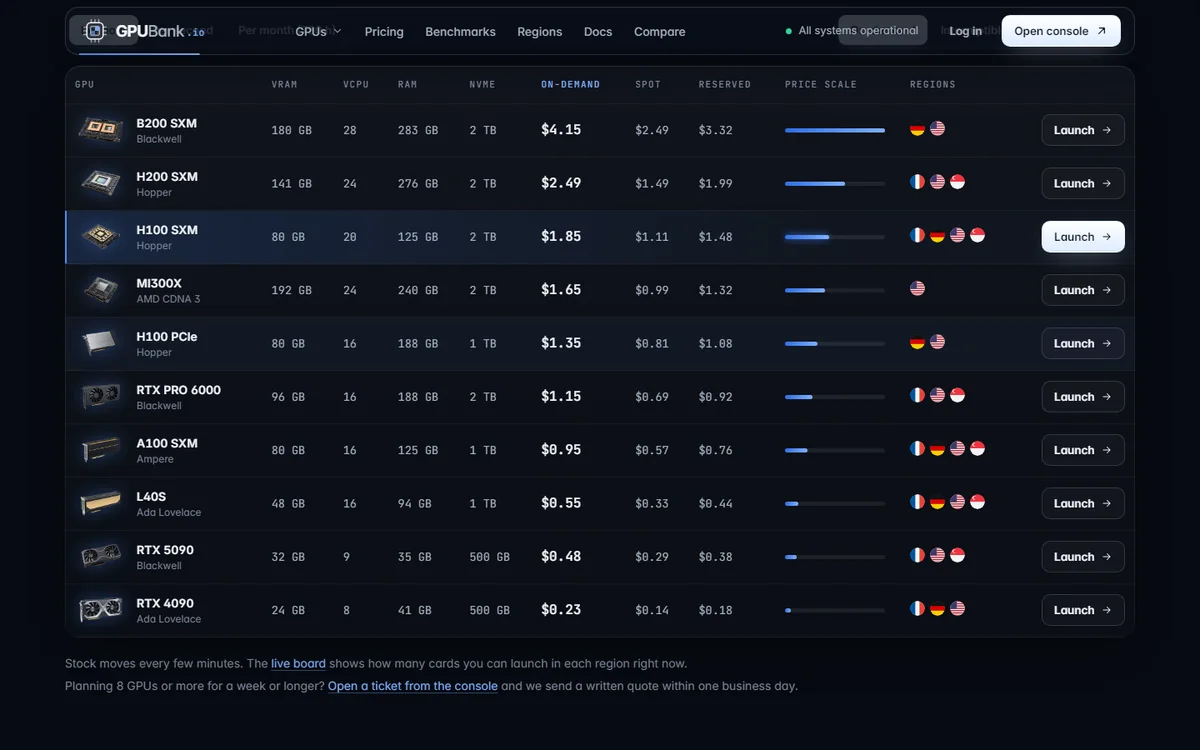
GPUBankAll-in
$1.35/hr
Managed cloud · per-second billing
16 vCPU188 GB RAM1 TB NVMeIPv4 and all trafficFrankfurt and AshburnSpot $0.81 · reserved $1.08
GPUBank rents the H100 PCIe at $1.35 an hour on demand, $0.000375 a second and $985.50 for a 730-hour month, with 16 vCPU, 188 GB of RAM, a 1 TB local NVMe disk, one public IPv4 address and all inbound and outbound traffic included per GPU, in machines of one to eight cards1. The only other line on a bill is a persistent disk at $0.03 per GB-month. The meter starts after the machine passes its health check, a failed launch is not billed, and a host failure during a job restarts the machine on a healthy host with the same disk and credits the session in full. Interruptible capacity costs $0.81 with five minutes of notice, and a week or month reserved costs $1.08. Payment is a prepaid balance topped up in crypto from $25, with bonuses that bring the effective on-demand hour to about $1.13 from $25 and $0.84 from $1,000.1
Checked 16 Oct 2026
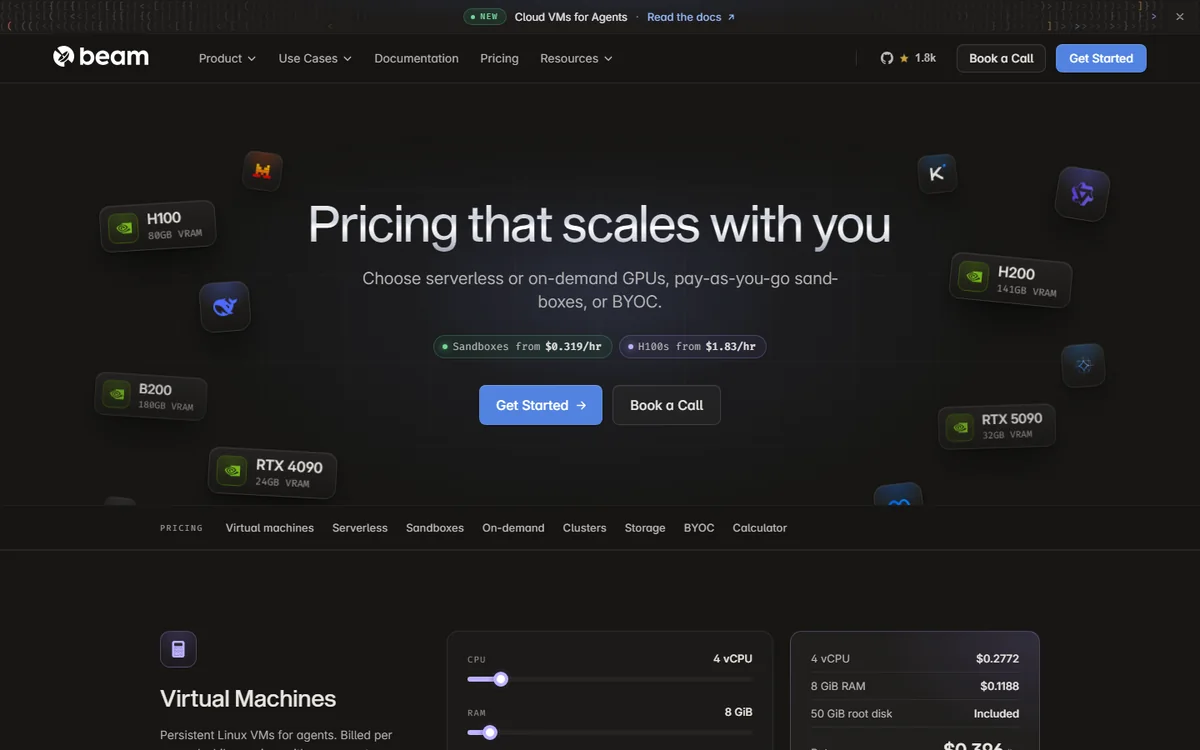
 Beam
from $1.83/hr
Managed cloud · machines and serverless
26 vCPU200 GB RAM1 TB NVMeNo egress feesRegions and stock not stated
Beam's pricing page lists an on-demand H100 PCIe machine from $1.83 an hour with 26 vCPU, 200 GB of RAM and a 1 TB NVMe disk, and states that it charges no egress or bandwidth fees2. That makes it the cheapest managed offer after GPUBank that we could read at source, with more CPU per card, though 'from' leaves room for higher prices on some configurations and the page states neither regions nor stock. Beam also sells the card serverless at $0.000972 per second of GPU time, about $3.50 an hour, with CPU at $0.000105 per core-second and memory at $0.0000055 per GiB-second on top, so the serverless rate suits endpoints that scale to zero and costs about twice the machine price for anything that runs all day. A Beam blog post quotes $1.74 for the same card, which disagrees with the pricing page; we use the pricing page.2
Checked 16 Oct 2026
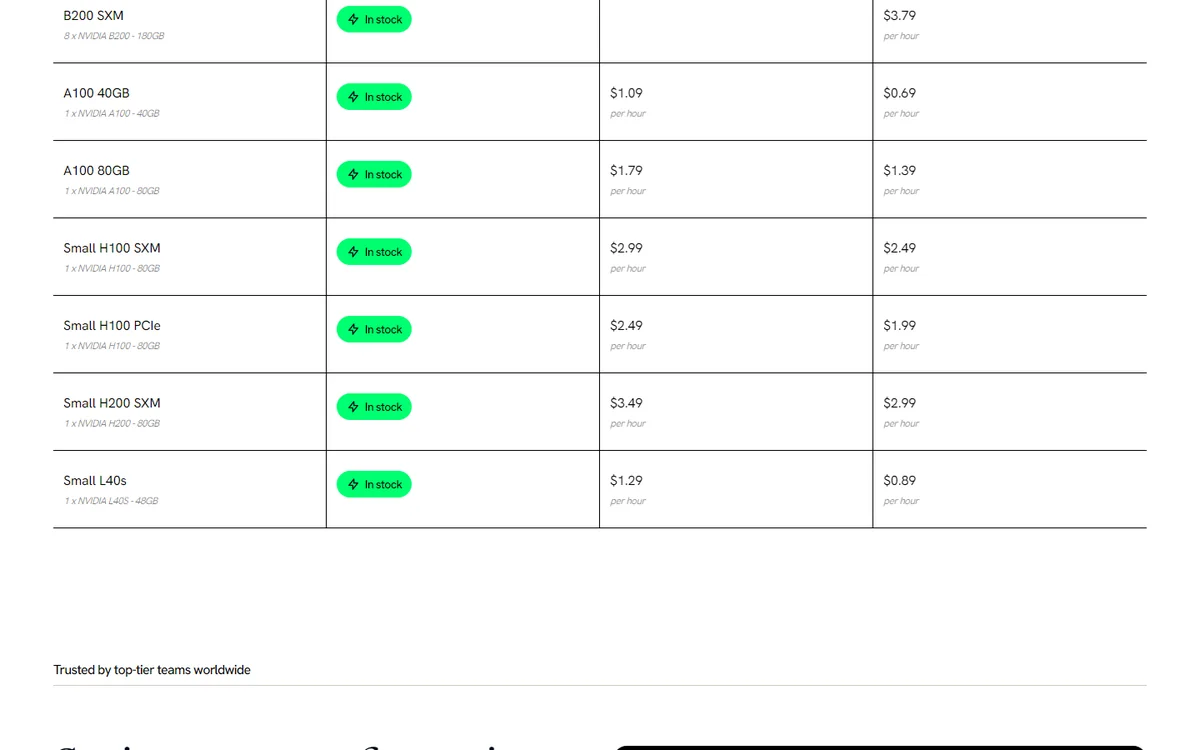
 Civo
$2.49/hr
Managed cloud · Kubernetes and VMs
1 H100 PCIe 80 GBNo ingress or egress feesBilled by the hour, rounded up$1.99 on a 36-month commitment
Civo lists a 'Small H100 PCIe' with one 80 GB card at $2.49 an hour on demand and $1.99 on a 36-month commitment, and it was marked in stock when we read the page3. It is one of the few providers that labels both its H100s clearly, with a Small H100 SXM next to it at $2.99 on demand. The page does not list the vCPU and RAM that come with the card, so compare machine sizes in the console before choosing it. Civo's billing documentation says services are billed hourly and rounded up to the nearest full hour30, which makes it a poor fit for many short runs: a 61-minute job is billed as two hours, $4.98. For a long-running workload in London with a three-year horizon, the committed rate is competitive with the managed offers above it, though still above GPUBank's one-month reservation.3
Checked 16 Oct 2026
 Hyperstack
$2.50/hr
Managed cloud · per-minute billing
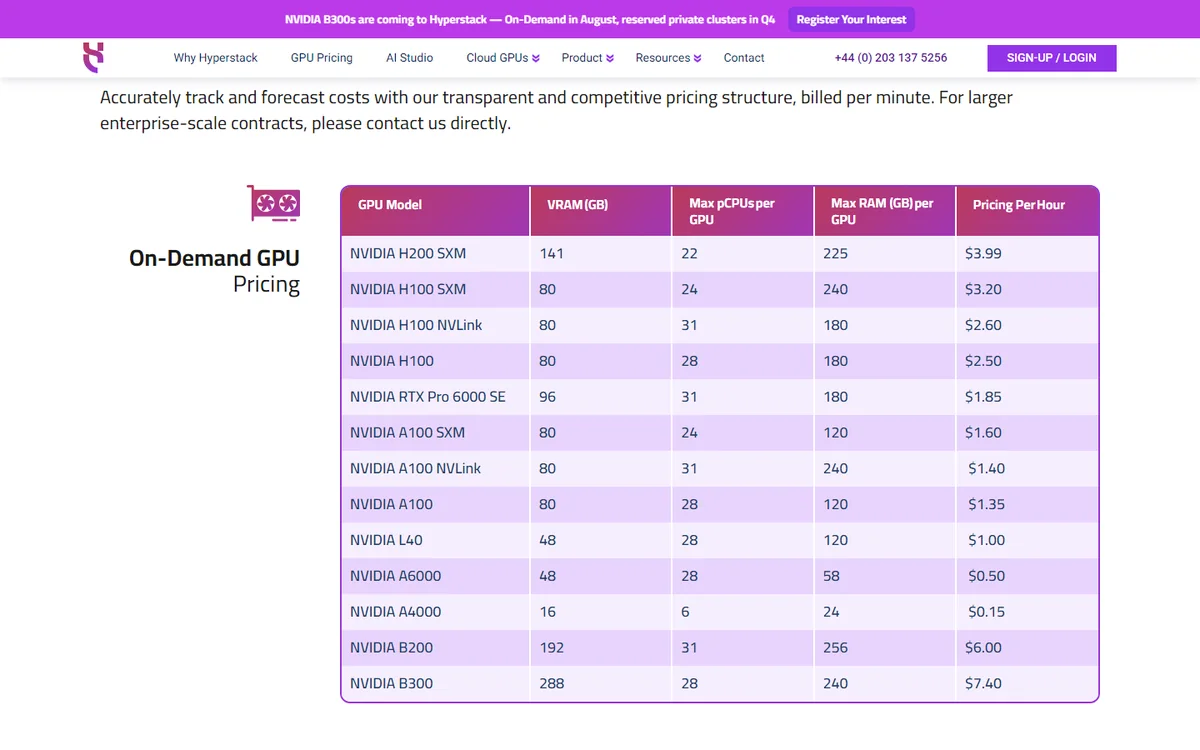
Up to 28 pCPU180 GB RAMRoot and ephemeral NVMeIPv4 $0.0067/hrSpot $2.00 · reserved from $1.75
Hyperstack lists the card as 'NVIDIA H100' at $2.50 an hour on demand with up to 28 physical CPU cores and 180 GB of RAM per GPU, and as 'NVIDIA H100 PCIe' at $2.00 in its spot table, with reservations starting from $1.75 on a term the page does not state4. A separate 'NVIDIA H100 NVLink' row at $2.60 is an eight-card machine of bridged PCIe cards, not the 94 GB NVL7. CPU, RAM and the root and ephemeral disks are included and egress is free, but a public IP costs about $0.0067 an hour and shared volumes about $0.07 per GB-month, and billing is by the minute on a prepaid balance4. Its own H100 PCIe product page quotes both $1.75 and $2.50 in different places, so read the pricing table rather than the marketing copy39. GetDeploying showed the single-card spot flavour in stock on 15 October.4
Checked 16 Oct 2026
 Runpod
$2.89/hr
Secure Cloud · Community Cloud $1.99
16 vCPU188 GB RAMDisks billed separatelyOut of stock on 15 Oct
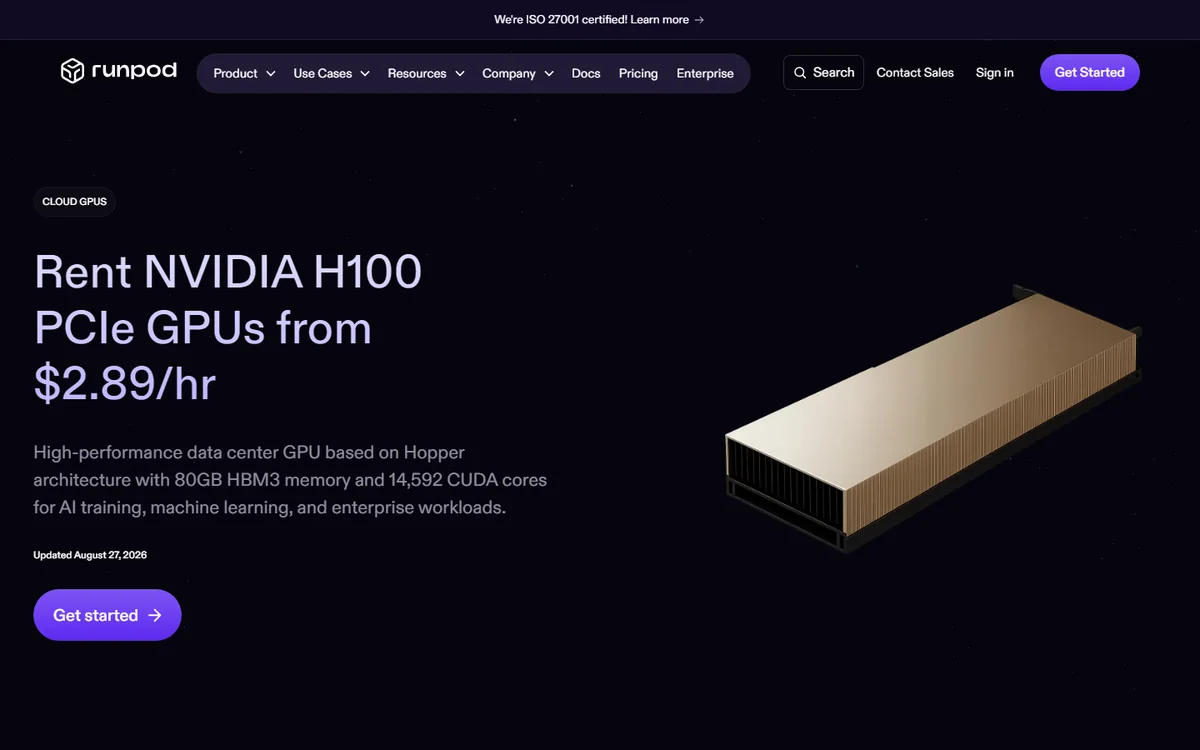
Runpod lists the H100 PCIe at $2.89 an hour on Secure Cloud and $1.99 on Community Cloud, where peer hosts supply the machines, both billed per second, with 16 vCPU and 188 GB of RAM on the card's listing29. Its H100 PCIe page, dated 27 August 2026, contradicts itself twice: the FAQ gives $2.39 for Secure Cloud against $2.89 in the table, and the headline calls the memory HBM3 while the spec table says HBM2e40. Storage is billed on top, at $0.10 per GB-month for a running volume disk, $0.20 while the Pod is idle and $0.07 for a network volume under 1 TB29. ComputePrices marked both tiers out of stock on 15 October8, so the Community price is a good number to watch rather than one you can count on, and the Secure Cloud price is more than twice GPUBank's for the same vCPU and RAM with every disk billed on top.29
Checked 16 Oct 2026
 Lambda
$3.29/hr
Managed cloud · per-minute billing
26 vCPU225 GiB RAM1 TiB SSDPlus sales tax or VATOut of stock on 15 Oct
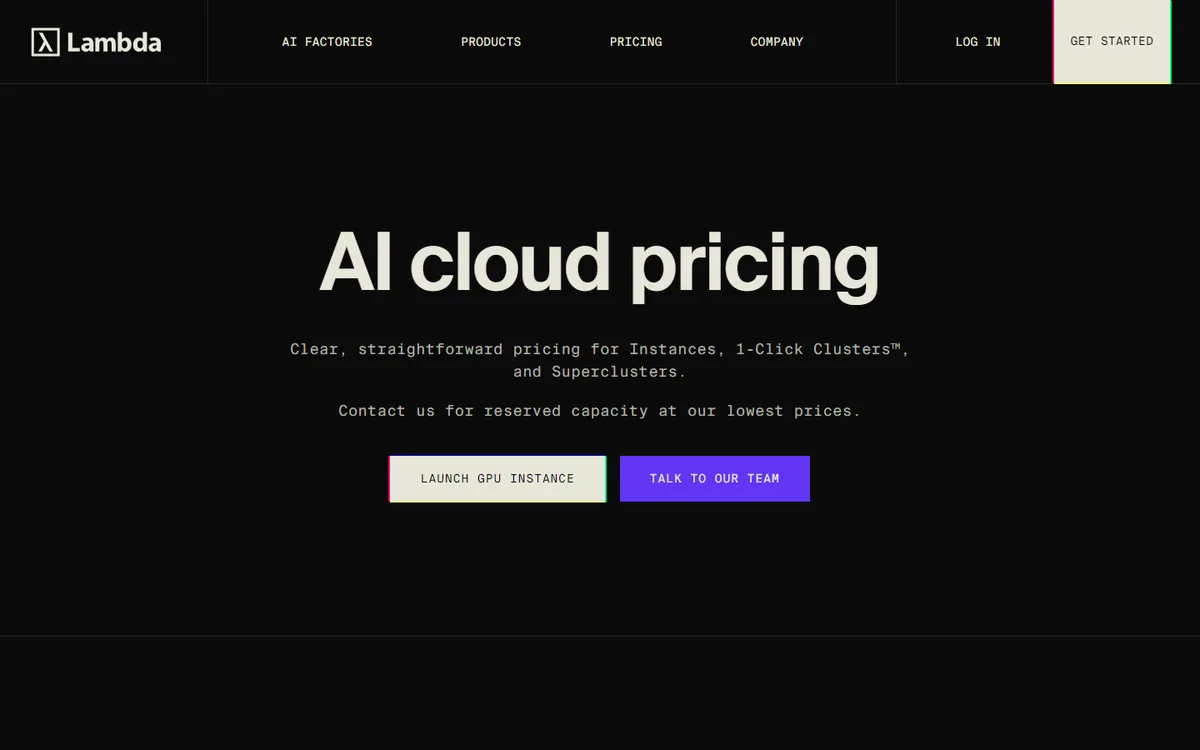
Lambda lists a single NVIDIA H100 PCIe instance at $3.29 an hour with 26 vCPU, 225 GiB of RAM and a 1 TiB SSD, plus applicable sales tax or VAT, billed by the minute with no egress fees26. It is often the first price people check, and the most expensive of the managed single-card offers we confirmed, at 2.4 times GPUBank's rate for a machine of similar size. Lambda's own single-GPU H100 SXM costs $4.29 on the same page, so the PCIe card saves 23 percent an hour while Lambda's own benchmark puts the SXM about 50 percent faster27, which makes the SXM the better buy there for any saturated job. ComputePrices marked the PCIe instance out of stock on 15 October, while GetDeploying showed it in stock the same day87, so check the console before planning around it.26
Checked 16 Oct 2026
Where GPUBank wins, and where it does not
GPUBank is cheapest where the comparison is like for like: a managed single card with the machine, the disk, the IP address and the traffic included. At $1.35 on demand it undercuts the next managed offer we could read at source, Beam from $1.83, by 26 percent, and Lambda's $3.29 by more than half; its reservation at $1.08 for a week or a month is the cheapest reserved hour we found and the shortest commitment, where Hyperstack starts at $1.75 on an unstated term and Civo asks 36 months for $1.99122643. Per-second billing from the health check, a full credit when a host fails mid-job and a persistent disk at $0.03 per GB-month make the monthly bill close to the rate times the hours1.
It loses in four places. Vast.ai interruptible bids have been well below its $0.81 interruptible rate, so a fine-tune that checkpoints often and tolerates host churn can cost less there. Its own H100 SXM at $1.85 finishes saturated training and serving jobs about 1.5 times faster, which makes it cheaper per job whenever the speed-up exceeds the price ratio of 1.372728. It offers this card only in Frankfurt and Ashburn, so teams that need a machine in Canada, London, Paris or Warsaw should look at Hyperstack, Civo or Scaleway. And it takes only crypto top-ups from $25 for now, with no card payments, which some finance departments cannot use1.
The rest of the market
Beyond the six providers above, the rest of the market is a long tail of smaller clouds whose prices we could read only through trackers. ComputePrices showed QuantaCloud at $2.59 in the US Midwest, Omega Gradient at $2.63 in Canada, OVHcloud at $2.99 for its h100-380 flavour, which pairs the card with 30 vCPU, 380 GB of RAM and 3.84 TB of passthrough NVMe and reports itself to nvidia-smi as 'NVIDIA H100 PCIe' in Spare Cores' test12, and AtmosCompute at $3.01, with Thunder Compute at $3.20 in an older reading dated 5 September, and GetDeploying showed Scaleway's single-card H100-1-80G at $3.21 in stock in Paris and Warsaw, Oblivus at $3.50 out of stock and Enverge at $4.008137. Scaleway's own page confirms that both its flavours carry the PCIe card, with 24 vCPU and 240 GB of RAM on the single-GPU one, but did not show a price when we read it14. io.net's own price guide, dated April 2026, gives $1.49 for an H100 PCIe on its decentralised network, a snapshot we could not refresh15.
The marketplace readings move by the hour, so their history says more than any single number. GridCompute, which tracks Vast.ai hourly, counted four on-demand H100 PCIe listings with eight GPUs between them on 8 October, with a lowest ask of $1.25 and a median of $2.78, and the median had ranged from $1.63 to $3.52 since tracking began on 2 October16. On the interruptible side GetDeploying showed a two-card Vast.ai listing in South Africa at $0.67 per GPU on 15 October, and Beam's own H100 article puts Vast.ai's interruptible offers 'around $0.35 per GPU-hour'517. Lium, whose price includes the node's local disk, was tracked at $1.40 in Almaty on 29 September and at $2.15 in Boardman in the United States, with 26 vCPU and 221 GB of RAM, on 7 October18. None of these hours comes with a fixed machine or a credit when the host goes away, and on Vast.ai the disk and bandwidth are billed on top of the ask11.
Massed Compute sells an 'H100 (80GB)' at $2.73 an hour with 20 vCPU, 128 GB of RAM and 1,250 GB of storage, next to separate rows for the H100 NVL and the H100 SXM5, so by elimination it is the PCIe card even though the page never says so19. On the marketplace side, Lium had no H100 PCIe free when we looked, only SXM listings, and OpenRelay was tracked at $2.20208. None of these is a reason to skip the providers above, but QuantaCloud and Massed Compute are worth a look if you need a US machine with a large local disk and the cheaper clouds are sold out.
The large clouds
None of the four large clouds rents an H100 PCIe 80 GB. Their H100 offers are SXM servers sold by the eight-GPU instance: AWS's p5.48xlarge lists at $55.04 an hour, $6.88 per GPU21, Google's a3-highgpu-8g costs $88.49 in us-central1, $11.06 per GPU22, Oracle's BM.GPU.H100.8 is $10.00 per GPU on its list price23, and Microsoft's ND96isr H100 v5 is about $98.32 a node in East US, $12.29 per GPU24. Azure's only single-card H100 VM, the NC40ads H100 v5, costs $6.98 an hour in East US with 40 vCPU and 320 GiB of RAM, and it carries an H100 NVL with 94 GB, not this card25.
These rows are useful only to show the gap. A large-cloud H100 hour costs five to nine times GPUBank's PCIe hour, for a faster card you must usually rent by eight, with egress billed on top and quotas to request before the first launch. Teams that already hold committed spend at one of these clouds, or that need the compliance paperwork and private networking that come with it, have reasons to stay; anyone paying list price for one GPU of single-card work does not. We read these prices through trackers rather than the clouds' own calculators, which require a region and purchase option to be chosen first.
05 / Every offer
The whole comparison, sorted by kind and price.
| Provider | USD / GPU-hr | Kind | Unit | What the price includes | Billing | Stock | Basis |
|---|---|---|---|---|---|---|---|
| GPUBank | $1.35 | Managed on demand | 1 GPU | 16 vCPU, 188 GB RAM, 1 TB NVMe, IPv4, traffic | Per second | In stock | Provider page1 |
| Beam | $1.83 | Managed on demand | 1 GPU | 26 vCPU, 200 GB RAM, 1 TB NVMe; price 'from' | Not stated | Not stated | Provider page2 |
| Civo | $2.49 | Managed on demand | 1 GPU | Machine size not listed; no egress fees | Hourly, rounded up | In stock | Provider page3 |
| Hyperstack | $2.50 | Managed on demand | 1 GPU | Up to 28 pCPU, 180 GB RAM; IPv4 extra; labelled 'NVIDIA H100' | Per minute | Not stated | Provider page4 |
| QQuantaCloud | $2.59 | Managed on demand | 1 GPU | 20 vCPU, 128 GB RAM, 1,250 GB disk | Not stated | In stock | Aggregator13 |
| OOmega Gradient | $2.63 | Managed on demand | 1 GPU | Not stated; Canada | Not stated | Not stated | Aggregator8 |
 Massed Compute | $2.73 | Managed on demand | 1 GPU | 20 vCPU, 128 GB RAM, 1,250 GB disk; labelled 'H100 (80GB)' | Not stated | Not stated | Provider page19 |
| Runpod Secure Cloud | $2.89 | Managed on demand | 1 GPU | 16 vCPU, 188 GB RAM; disks extra | Per second | Sold out | Provider page29 |
 OVHcloud | $2.99 | Managed on demand | 1 GPU | h100-380: 30 vCore, 380 GB RAM, NVMe passthrough | Hourly | Not stated | Aggregator8 |
| AAtmosCompute | $3.01 | Managed on demand | 1 GPU | Not stated | Not stated | Not stated | Aggregator8 |
 Scaleway | $3.21 | Managed on demand | 1 GPU | H100-1-80G: 24 vCPU, 240 GB RAM; IPv4 extra | Hourly, 1-hour minimum | In stock | Aggregator7 |
| Lambda | $3.29 | Managed on demand | 1 GPU | 26 vCPU, 225 GiB RAM, 1 TiB SSD; plus tax | Per minute | Sold out | Provider page26 |
 Oblivus | $3.50 | Managed on demand | 1 GPU | Not stated | Not stated | Sold out | Aggregator7 |
 io.net | $1.49 | Marketplace | 1 GPU | Decentralised network; snapshot dated April 2026 | Not stated | Not stated | Provider snapshot15 |
| GGPU.ai | $1.98 | Marketplace | 1 GPU | Partner host's machine at its rate | Not stated | Sold out | Aggregator7 |
| Runpod Community Cloud | $1.99 | Marketplace | 1 GPU | 16 vCPU, 188 GB RAM as listed; disks extra | Per second | Sold out | Provider page29 |
 Vast.ai | $2.00 | Marketplace | 1 GPU | Host's share of CPU and RAM; disk and bandwidth extra | Per second | Sold out | Aggregator8 |
| OOpenRelay | $2.20 | Marketplace | 1 GPU | Not stated | Not stated | Not stated | Aggregator8 |
| GPUBank | $0.81 | Spot and interruptible | 1 GPU | Same machine; 5 min notice, stopped not deleted | Per second | In stock | Provider page1 |
| Hyperstack | $2.00 | Spot and interruptible | 1 GPU | Labelled 'NVIDIA H100 PCIe'; notice not stated | Per minute | In stock | Provider page4 |
 Spheron | $2.20 | Spot and interruptible | 4 GPUs | Hyperstack capacity resold, CANADA-1 | Not stated | In stock | Aggregator7 |
| GPUBank | $1.08 | Reserved | 1 GPU | Week or month, prepaid, same machine | Per term | On request | Provider page1 |
| Hyperstack | $1.75 | Reserved | 1 GPU | 'Starting from'; term not stated | Per term | On request | Provider page4 |
| Civo | $1.99 | Reserved | 1 GPU | 36-month commitment | Per term | In stock | Provider page3 |
| Oblivus | $2.56 | Reserved | 1 GPU | 36-month term | Per term | Not stated | Aggregator7 |
 AWS p5.48xlarge | $6.88 | Large clouds | 8-GPU node | H100 SXM, not PCIe; $55.04 per node | Per second | Not stated | Aggregator21 |
 Azure NC40ads H100 v5 | $6.98 | Large clouds | 1 GPU | H100 NVL 94 GB, not PCIe; 40 vCPU, 320 GiB | Per hour | Not stated | Aggregator25 |
 Oracle BM.GPU.H100.8 | $10.00 | Large clouds | 8-GPU node | H100 SXM bare metal, not PCIe | Per hour | Not stated | Aggregator23 |
 Google a3-highgpu-8g | $11.06 | Large clouds | 8-GPU node | H100 SXM, not PCIe; $88.49 per node | Per second | Not stated | Aggregator22 |
| Azure ND96isr H100 v5 | $12.29 | Large clouds | 8-GPU node | H100 SXM, not PCIe; about $98.32 per node | Per hour | Not stated | Aggregator24 |
| Beam | $3.50 | Serverless | 1 GPU | $0.000972 per GPU-second; CPU and RAM extra | Active time | Not stated | Provider page2 |
"Aggregator" rows could not be read on the provider's own page that day; "Provider snapshot" rows come from a page dated by the provider.
06 / The real monthly bill
What an H100 PCIe really costs beyond the hourly rate
Storage is the first line that changes the bill. GPUBank charges $0.03 per GB-month for a persistent disk and nothing else while a machine is stopped1. Runpod charges $0.07 per GB-month for a network volume under 1 TB and $0.20 for the volume disk of an idle Pod29, and Hyperstack's shared volumes work out to about $0.074. Keeping 500 GB of checkpoints for a month therefore costs $15 at GPUBank, about $35 on a Runpod or Hyperstack volume and $100 on an idle Runpod Pod disk, and on a light month that can rival the compute. Hyperstack also bills a public IP at about $0.0067 an hour, $4.91 for a full month, where GPUBank, Beam and Lambda include traffic and GPUBank includes the address4226.
Billing granularity decides what a short job costs. A run of 61 minutes costs $1.37 on GPUBank's per-second meter, $2.54 on Hyperstack and $3.35 on Lambda, both billed by the minute, and $4.98 on Civo, whose billing rounds each service up to the next full hour, so the 61 minutes, worth $2.53 at its rate, are billed as two30. Scaleway also bills by the hour with a one-hour minimum per resource, according to GetDeploying7. On a month of evaluations, restarts and quick tests, that rounding can be worth more than the gap between two hourly rates, so a team that launches many short jobs should weigh the meter before the headline price.
The last cost is time. A marketplace host that disappears mid-run, a spot instance reclaimed without warning or a listing slower than its card suggests costs the GPU-hours already spent and the hours to redo them, and on a marketplace the renter pays for both. GPUBank credits a session interrupted by a host failure in full, gives five minutes of notice before reclaiming interruptible capacity and credits the last 30 minutes if the notice is missed1. Prepaid balances add a smaller risk: GPUBank's minimum top-up is $25 and the credit never expires, and its bonus lowers the effective rate only if the credit is actually spent. Running dry is treated very differently from one cloud to the next: Hyperstack's FAQ warns that resources on a drained balance are scheduled for termination after a short grace period and may be deleted for good after a week4.
Three workloads, priced for a month
GPUBank
220 h GPU$297.00
Storage$6.00
OtherNone
Month$303.00
On demand; $189.38 in cash from a $1,000 top-up
All-inBeam
220 h GPU$402.60
Storage$0.00
OtherStorage not priced
Month$402.60
Machine 'from' $1.83; persistent storage price not on page
Runpod Community
220 h GPU$437.80
Storage$14.00
OtherNone
Month$451.80
Network volume $0.07/GB-month; card in stock (it was not on 15 Oct)
Vast.ai
220 h GPU$440.00
Storage$0.00
OtherDisk and bandwidth set by host
Month$440.00
$2.00 host held all month, extras not counted
Hyperstack
220 h GPU$550.00
Storage$14.13
OtherIPv4 $1.48
Month$565.61
IP billed while running
GPUBank wins this one on every assumption we tried. 220 hours at $1.35 is $297.00, and 200 GB of persistent disk at $0.03 adds $6.00, for $303.00; paid from a $1,000 top-up credited as $1,600, the same month costs $189.38 in cash. Beam's machine from $1.83 comes to $402.60 before any persistent storage, a Vast.ai host at $2.00 to $440.00 before the host's disk and bandwidth, Runpod Community to $437.80 plus $14.00 of network volume, $451.80, and Hyperstack to $550.00 plus $14.13 of volume and $1.48 of IP, $565.61. Only a marketplace host below about $1.30 kept for the whole month would undercut GPUBank's list price, and none was listed when we checked.
GPUBank H100 SXM interruptible
60 h GPU$44.40
Storage$15.00
OtherNone
Month$59.40
40 hours if the 1.5x SXM speed-up holds
All-inGPUBank interruptible
60 h GPU$48.60
Storage$15.00
OtherRework $0.27
Month$63.87
Two reclaims, 10 minutes lost each
All-inGPUBank on demand
60 h GPU$81.00
Storage$15.00
OtherNone
Month$96.00
No interruptions
All-inRunpod Community
60 h GPU$119.40
Storage$35.00
OtherNone
Month$154.40
Card in stock; network volume
Hyperstack spot
60 h GPU$120.00
Storage$35.32
OtherIPv4 $0.40
Month$155.72
No reclaims counted
On the PCIe card, GPUBank's interruptible tier is the cheapest option with the machine and storage included: 60 hours at $0.81 is $48.60, 500 GB of disk adds $15.00, and two reclaims costing ten minutes of rework each add $0.27, $63.87 in all, against $96.00 on demand and about $155 at Runpod Community or Hyperstack spot, where the volume alone costs $35. The twist is the faster card: if the H100 SXM's 1.5 times speed-up holds for this job, the four runs take 40 hours, $44.40 interruptible or $74.00 on demand, plus the same $15.00 of disk, cheaper than the PCIe card in both modes. Vast.ai interruptible bids, when listed, have been low enough to beat all of these, at the cost of host churn and your own storage management.
GPUBank reserved
730 h GPU$788.40
Storage$3.00
OtherNone
Month$791.40
One-month reservation, prepaid
All-inGPUBank on demand
730 h GPU$985.50
Storage$3.00
OtherNone
Month$988.50
$617.81 in cash from $1,000 top-ups
All-inHyperstack reserved
730 h GPU$1,277.50
Storage$7.06
OtherIPv4 $4.91
Month$1,289.47
'Starting from' $1.75, term not stated
Beam
730 h GPU$1,335.90
Storage$0.00
OtherStorage not priced
Month$1,335.90
Machine 'from' $1.83 with 1 TB local NVMe
Civo commitment
730 h GPU$1,452.70
Storage$0.00
OtherStorage not priced
Month$1,452.70
$1.99 on a 36-month commitment
A one-month GPUBank reservation costs $788.40 for 730 hours plus $3.00 for 100 GB of disk, $791.40, and on demand the month is $988.50, or $617.81 in cash when paid from $1,000 top-ups. Hyperstack's reserved $1.75 comes to $1,277.50 plus $4.91 of IP and $7.06 of volume, $1,289.47, on a term its page does not state; Beam's machine from $1.83 comes to $1,335.90; Civo's $1.99 comes to $1,452.70 and binds you for three years. GPUBank wins on every assumption here, and it is also the shortest commitment. The answer would change only if a marketplace host below $1.08 stayed up all month, which we did not see, and a production endpoint on such a host carries no credit when it fails.
07 / Per job
What the H100 PCIe does per job
Every measurement we found puts the H100 SXM about half again as fast as the PCIe card. Lambda measured a 49 to 51 percent premium for the SXM on a geomean of PyTorch FP16 and TF32 training throughput across SSD, BERT, GNMT, ResNet-50, Tacotron 2 and WaveGlow27, and Runpod's vLLM test on Qwen2.5-7B-Instruct at one request per second measured 165 tokens a second on the SXM against 109 on the PCIe card, a ratio of 1.51, with a median time to first token of 43 ms on the PCIe card28. The gap follows the hardware: 3.35 against 2.0 TB/s of memory bandwidth and 700 against 350 W of power to sustain clocks319.
Against the A100 the picture is closer. In llama.cpp on Llama 3, the H100 PCIe generated 25.01 tokens a second on 70B Q4_K_M against 24.33 for the A100 SXM, almost the same, but processed prompts much faster, 7,760 against 5,864 tokens a second on 8B Q4_K_M, and 984 against 797 on 70B Q4_K_M, where the L40S managed 64932. On the small 8B model at Q4_K_M it generated 144.49 tokens a second, against 138.31 on the A100 PCIe, 133.38 on the A100 SXM and 113.60 on the L40S. llama.cpp does not use Hopper's FP8 path, so these numbers understate what the H100 gains in vLLM or TensorRT-LLM with FP8 weights. Runpod's vLLM test, which does run on a modern serving stack, put the PCIe card 14 percent ahead of the A100 SXM at 109 against 96 tokens a second28.
Turned into cost at GPUBank's on-demand prices, a million single-stream tokens in Runpod's test costs $3.44 on the H100 PCIe, $3.11 on the H100 SXM, $2.75 on the A100 SXM, $3.18 on the L40S and $3.59 on the RTX PRO 6000, and in the llama.cpp 70B test a million generated tokens costs $14.99 on the H100 PCIe, $10.85 on the A100 SXM and $9.98 on the L40S. These are single-stream figures, and a batched server makes every token far cheaper on all of these cards, but the ranking carries over. A training run that takes 10 hours on the PCIe card ($13.50) takes about 6.7 hours on the SXM ($12.33). The PCIe card earns its hour when the GPU is partly idle, as in notebooks, development sessions, low-traffic endpoints and pipelines held back by CPU or storage, where wall-clock time rather than throughput sets the bill, and when a model needs more than the L40S's 48 GB.
Runpod, Best GPU for LLM inference (2026); vLLM version and precision not stated; per-user speed, not saturated throughput.28
XiongjieDai, GPU-Benchmarks-on-LLM-Inference, single rented GPUs; llama.cpp does not use the FP8 path.32
XiongjieDai, GPU-Benchmarks-on-LLM-Inference, single rented GPUs.32
Our arithmetic: tokens a second times 3,600, priced at $0.95, $1.85, $0.55, $1.35 and $1.15 an hour; single stream, so a batched server costs far less per token on every card.28
WHOLE MACHINE
$1.35
GPUBank on demand, CPU, RAM, NVMe, IP and traffic included
SXM SPEED-UP
1.5x
Lambda training and Runpod vLLM, same verdict
BUY BREAK-EVEN
904 h
a month to beat $1.35; a month has 730
08 / Against other cards
H100 PCIe or another card, job by job
For single-stream decoding of a model that fits in 48 GB, the L40S at $0.55 is cheaper per token than the H100 PCIe even though it is less than half as fast: 48 against 109 tokens a second in Runpod's test, and 15.31 against 25.01 on Llama 3 70B at 4-bit in llama.cpp2832. The A100 SXM at $0.95 decodes at nearly the PCIe card's speed for 30 percent less, which makes it the cheaper choice for plain inference and fine-tunes that do not use FP8. The RTX PRO 6000 at $1.15 brings 96 GB, enough for a 70B model at 8-bit on one card, and CloudRift measured it slightly ahead of an H100 SXM under heavy concurrent load, 3,140 against 2,987 tokens a second serving GLM-4.5-Air at 4-bit with 256 to 512 requests in flight, though it trails the PCIe card at one request per second, 89 against 1093328.
That leaves the H100 PCIe a specific place: 80 GB of HBM, FP8 and fast prefill on one card, at a lower hour than the SXM, for work that does not keep the GPU saturated. If the job runs flat out for hours, rent the H100 SXM; if it fits in 48 GB, rent the L40S; if it needs more than 80 GB on one card, rent the RTX PRO 6000. On GPUBank all four sit on the same terms, per-second billing with the machine included, so switching cards between jobs costs nothing but a new launch1.
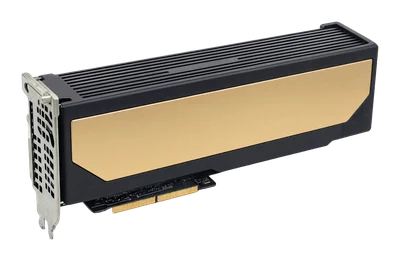
L40S
48 GB GDDR6 ECC · 864 GB/s
$0.55/hr
Stable Diffusion, video, Whisper transcription and embeddings
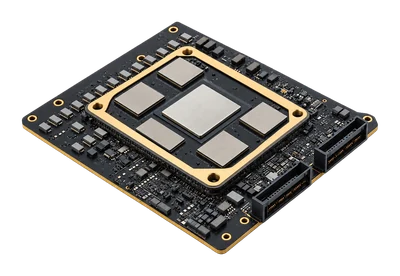
A100 SXM
80 GB HBM2e · 2.0 TB/s
$0.95/hr
LoRA and QLoRA fine-tuning, batch inference
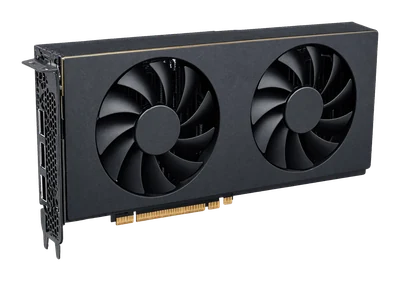
RTX PRO 6000
96 GB GDDR7 ECC · 1.8 TB/s
$1.15/hr
Serving 70B models in 4-bit and AI video generation
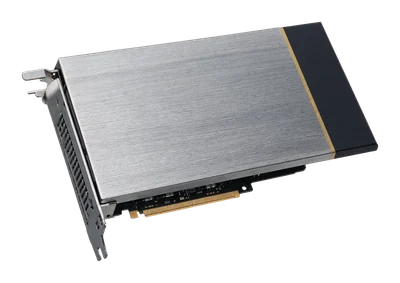
H100 PCIe
80 GB HBM2e · 2.0 TB/s
$1.35/hr
Single-GPU training and inference on a budget
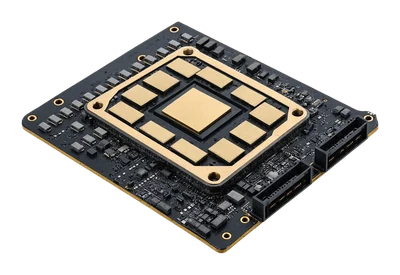
H100 SXM
80 GB HBM3 · 3.35 TB/s
$1.85/hr
AI training, fine-tuning and production LLM inference
GPUBank on-demand prices, all-in. Memory bar scaled to 96 GB.
09 / Rent or buy
Rent or buy an H100 PCIe
The realistic purchase is one card in a standard 2U server. GPUDojo's tracker recorded a Newegg listing at $29,500 on 9 October 2026, a 90-day low after $34,989 a week earlier, and a used eBay offer at $27,999.99 in September34, and Caladan Semiconductor recorded three used US asks between $28,000 and $32,399, with a median of $32,000, on 9 September35. We take $29,500 for the card and assume $10,000 for the server, a resale value after two years of 35 percent of the card price and $2,000 for the server, 0.65 kW at the wall under load and $0.15 per kWh. The fixed cost is then $39,500 less $12,325 of resale over 24 months, $1,132.29 a month, plus $0.0975 of power for every hour of load.
Against GPUBank's $1.35 on demand, ownership breaks even only at 1,132.29 divided by 1.2525, about 904 hours a month, and a month has 730. At full use owning costs $1,203.47 a month against $985.50 on demand, $788.40 reserved and $615.94 at the effective rate from a $1,000 top-up, before any colocation fee; a rack slot at $150 a month would lift the fixed cost to $1,282.29 and the break-even against on demand to about 1,024 hours. With a used card at $25,000, an $8,000 server and 50 percent card resale, ownership falls to about $842 a month at full use, below the on-demand month but still above the reserved and top-up prices. Buy only if your data cannot leave your premises, the rack and power are already paid for and the card will be busy every hour for two years.
| Hours a month | Rent at $1.35 | Rent at $0.84 effective | Own | Cheaper |
|---|---|---|---|---|
| 100 | $135.00 | $84.38 | $1,142.04 | Rent |
| 200 | $270.00 | $168.75 | $1,151.79 | Rent |
| 400 | $540.00 | $337.50 | $1,171.29 | Rent |
| 730 | $985.50 | $615.94 | $1,203.47 | Rent |
Newegg listing recorded by GPUDojo on 9 Oct 2026; used asks $28,000 to $32,399 (Caladan, Sep 2026)
10 / What to choose
The cheapest H100 PCIe depends on the job.

A team serving a 30B to 70B model to a few users
H100 PCIe on demand or reserved
80 GB holds a 70B model at 4-bit with room for context, and the endpoint rarely saturates the card, so the cheaper hour wins over the SXM.

Fine-tuning runs that keep the GPU busy for hours
H100 SXM, interruptible if you checkpoint
About 1.5 times faster for $1.85 against $1.35, so each finished run costs less on the SXM.

Notebooks, development and evaluation sessions
H100 PCIe billed per second
The card sits idle much of the time, so wall-clock price and per-second billing matter more than peak throughput.

Models that fit in 48 GB, served at the lowest cost per token
L40S or A100 SXM
At $0.55 and $0.95 an hour they cost less per generated token than the H100 PCIe in every single-stream test we found.
11 / Questions
What people ask before renting one.
The cheapest managed H100 PCIe we could verify on a provider's own page was GPUBank at $1.35 an hour on demand, $1.08 reserved and $0.81 interruptible, with 16 vCPU, 188 GB of RAM, a 1 TB NVMe disk, a public IP and all traffic included1. Beam's machine from $1.83, Civo at $2.49 and Hyperstack at $2.50 came next234. Marketplaces can list lower hours, and Vast.ai's interruptible bids have been well under a dollar, but on 16 October its H100 PCIe page showed no offers, and Runpod Community Cloud at $1.99 and GPU.ai at $1.98 were marked out of stock687. Which is cheapest for you depends on whether your job survives an interruption and whether you want to manage hosts and storage yourself.
On 15 and 16 October 2026 an H100 PCIe cost between $1.35 and $3.50 an hour on demand at managed clouds, about $2.00 on marketplaces with stock and from $0.81 on interruptible capacity. The managed prices we read at source were GPUBank $1.35, Beam from $1.83, Civo $2.49, Hyperstack $2.50, Massed Compute $2.73, Runpod Secure Cloud $2.89 and Lambda $3.291234192926. GPUBank's own survey of public on-demand prices put the market average at $2.71 on 29 September41. A full 730-hour month therefore runs from $985.50 to about $2,400 before storage, and the large clouds do not sell this card at all.
They share the Hopper chip but not the memory, power or interconnect. The PCIe card has 80 GB of HBM2e at 2.0 TB/s, a 350 W limit and an NVLink bridge to one other card9. The SXM module has 80 GB of HBM3 at 3.35 TB/s, up to 700 W and 900 GB/s of NVLink through NVSwitch on an eight-GPU board, and the NVL is a PCIe card with 94 GB of HBM3 at 3.9 TB/s and 350 to 400 W31. Measured, the SXM is about 1.5 times faster than the PCIe card in training and single-user inference2728. Many price lists write only 'H100', so check the variant before comparing, or run nvidia-smi, which names each one differently.
Often yes, whenever the job keeps the card busy. Lambda measured the SXM 49 to 51 percent faster than the PCIe card on PyTorch training throughput, and Runpod measured 165 against 109 tokens a second in a single-user vLLM test2728. At GPUBank's $1.85 and $1.35 the price ratio is 1.37, so a speed-up above that makes the SXM cheaper per finished job: a 10-hour run on the PCIe card costs $13.50, the same run on the SXM about 6.7 hours and $12.331. The PCIe card stays cheaper for work that leaves the GPU partly idle, such as notebooks, development and low-traffic endpoints, where you pay for wall-clock hours rather than throughput.
Only when you use what Hopper adds. In llama.cpp on Llama 3, the H100 PCIe generated 25.01 tokens a second on 70B Q4_K_M against 24.33 on the A100 SXM, nearly the same, but processed prompts about a third faster, 7,760 against 5,864 tokens a second on 8B Q4_K_M32. In Runpod's vLLM test it decoded 109 against 96 tokens a second28. At GPUBank's $1.35 and $0.95, the A100 is cheaper per single-stream token, $2.75 against $3.44 per million1. The H100 pulls ahead with FP8 weights in vLLM or TensorRT-LLM, with long prompts, and with the Transformer Engine in training, none of which llama.cpp measures.
Pick by memory first. If the model fits in 48 GB and cost per token matters most, the L40S at $0.55 is cheapest: 48 tokens a second in Runpod's single-user test, $3.18 per million tokens against $3.44 on the H100 PCIe281. If you need more than 80 GB on one card, the RTX PRO 6000 at $1.15 has 96 GB, and CloudRift measured it slightly ahead of an H100 SXM under heavy concurrency on a 4-bit model33. The H100 PCIe sits between them: 80 GB of HBM, FP8 and the fastest single-user decode of the three, 109 tokens a second against 89 on the RTX PRO 6000.
A full 730-hour month costs $985.50 on demand and $788.40 reserved at GPUBank, $1,825 at Hyperstack's $2.50, $2,109.70 on Runpod Secure Cloud and $2,401.70 on Lambda, before storage and, where charged, IP addresses142926. Civo's committed $1.99 comes to $1,452.70 but binds you for 36 months3. Paid from a $1,000 GPUBank top-up credited as $1,600, the on-demand month costs about $616 in cash. Most renters do not run the card all month: at 220 working hours GPUBank's bill is $297 plus disk, which is why per-second billing and cheap storage while stopped matter as much as the rate.
The cheapest interruptible H100 PCIe we could book on 16 October was GPUBank's at $0.81 an hour, with five minutes of notice through the metadata endpoint, a webhook and the console, a checkpoint hook, a stop rather than a deletion and 30 minutes credited if the notice is missed1. Vast.ai's interruptible bids have been far lower when hosts list them, but its page showed no H100 PCIe offers that day, and its interruptible instances pause whenever a higher bid or an on-demand renter takes the machine611. Hyperstack's spot H100 PCIe costs $2.00 and does not describe its notice4. For a fine-tune that checkpoints often, interruptible capacity is the cheapest way to run this card.
You can rent a single H100 PCIe almost everywhere it is sold, which is the main reason this variant is popular. GPUBank, Beam, Civo, Hyperstack, Massed Compute, Runpod, Lambda and Scaleway all rent it one card at a time, and GPUBank sells machines of one to eight cards with CPU, RAM and disk scaled in proportion1. Minimums appear in reservations and in a few products: Civo's and Oblivus's reserved prices require 36 months, Spheron's spot row is a four-card machine, and Hyperstack's 'H100 NVLink' product is an eight-card server37. The large clouds rent no H100 PCIe at all, only eight-GPU SXM servers and Azure's single H100 NVL.
It matters whenever jobs are short or irregular, and it can outweigh a small difference in hourly rate. A 61-minute job costs $1.37 on GPUBank's per-second meter, $2.54 on Hyperstack and $3.35 on Lambda, both billed by the minute, and $4.98 on Civo, whose billing rounds up to the next full hour130. Over a month of tests, evaluations and restarts, hourly rounding can add a large share to the bill. Check also when the meter starts: GPUBank bills only once the machine has passed its health check and does not bill a failed launch, so the minutes spent on a bad host are not yours to pay.
Check storage while stopped, public IP fees, egress, the billing increment and what happens when the balance runs out. A persistent disk costs $0.03 per GB-month at GPUBank, $0.07 on a Runpod network volume or a Hyperstack shared volume and $0.20 on an idle Runpod Pod disk1294. Hyperstack bills a public IP at about $0.0067 an hour, while GPUBank includes one IPv4 address and all traffic, and Beam and Lambda charge no egress226. On Vast.ai each host sets its own disk and bandwidth rates on top of the GPU price11, and Lambda adds sales tax or VAT to its listed rate.
Not under realistic assumptions, even at full use. A card was listed at $29,500 on Newegg on 9 October 2026, and used asks ran from $28,000 to $32,399 in September3435. With a $10,000 server, 35 percent card resale after two years, $2,000 of server resale and 0.65 kW at $0.15 per kWh, owning costs $1,132.29 a month plus $0.0975 an hour, $1,203.47 at 730 hours, before colocation. Renting the same month at GPUBank costs $985.50 on demand, $788.40 reserved and about $616 at the effective $1,000 top-up rate1. Break-even against on demand would need about 904 hours a month, so buy only when data cannot leave your premises and the rack and power are already paid for.
GPUBank runs on a prepaid US dollar balance that you top up in cryptocurrency, from $25 to $5,000 at a time; cards are not accepted for now1. It takes Bitcoin, Ethereum, USDT, USDC, Monero and more than a dozen other coins, and the balance never expires. Each top-up carries a bonus of 20 percent from $25, 30 percent from $50, 35 percent from $100, 40 percent from $250, 50 percent from $500 and 60 percent from $1,000, so the effective on-demand hour falls from $1.35 to about $1.13, $1.00 and $0.84 at the $25, $100 and $1,000 levels. Every account and every team member can have a monthly spend cap, which stops a forgotten machine from emptying the balance. Most clouds in this comparison take cards instead: Hyperstack, for example, charges a prepaid balance through Stripe4. GPUBank is run by GPU Compute OÜ in Tallinn, Estonia, registry code 17984370.
Yes for single-GPU LoRA and QLoRA, less so for anything that runs flat out for long or spans several cards. Its 80 GB holds a 70B model in 4-bit with room for adapters and activations, and frameworks such as Axolotl and Unsloth run on it unchanged; GPUBank has templates for both1. Lambda measured the SXM about 1.5 times faster on training throughput27, so at GPUBank's prices a 10-hour PCIe run at $13.50 becomes about $12.33 on the SXM. Beyond two cards the PCIe version talks over PCIe rather than NVSwitch, so multi-GPU training scales poorly, and an SXM server is the right tool for that.
Sources
Sources
- 01GPUBank pricingH100 PCIe on demand, interruptible and reserved rates, inclusions, disk price, top-up bonuses, other GPUBank cards · read 16 Oct 2026
- 02Beam pricingH100 PCIe machine from $1.83, specs, serverless per-second rate, no egress fees · read 16 Oct 2026
- 03Civo cloud GPUSmall H100 PCIe at $2.49, $1.99 on 36 months, in stock · read 16 Oct 2026
- 04Hyperstack GPU pricingH100 on demand, spot and reserved rates, labels, public IP, volumes · read 16 Oct 2026
- 05GetDeploying, Vast.ai pricingTwo-card interruptible H100 PCIe listing at $0.67 per GPU on 15 Oct 2026 · read 15 Oct 2026
- 06Vast.ai, Rent H100 PCIE GPUsNo current offers on the check date · read 16 Oct 2026
- 07GetDeploying, NVIDIA H100 rental pricesAggregator rows and stock for Scaleway, Oblivus, GPU.ai, Spheron, Hyperstack NVLink machine · read 16 Oct 2026
- 08ComputePrices, H100 PCIeAggregator rows dated 15 Oct 2026, stock flags for Runpod and Lambda · read 16 Oct 2026
- 09NVIDIA H100 PCIe GPU product brief, PB-11133-001_v02HBM2e, 2,000 GB/s, 350 W, NVLink bridges at 600 GB/s, form factor · read 16 Oct 2026
- 10NVIDIA H100 PCIe datasheet (October 2022, partner copy)Sparse tensor TFLOPS and the note that dense figures are half · read 16 Oct 2026
- 11Vast.ai documentation, PricingHost-set prices, storage and bandwidth billed on top, per-second billing · read 15 Oct 2026
- 12Spare Cores, OVHcloud h100-380h100-380 specs and nvidia-smi reporting 'NVIDIA H100 PCIe' · read 15 Oct 2026
- 13GPUPerHour, rent H100 PCIeQuantaCloud and Massed Compute offers in stock on 15 Oct 2026 · read 16 Oct 2026
- 14Scaleway H100 PCIe GPU instanceH100-1-80G and H100-2-80G carry H100 PCIe cards, vCPU and RAM · read 16 Oct 2026
- 15io.net, How much does an H100 cost per hourH100 PCIe at $1.49, page dated April 2026 · read 16 Oct 2026
- 16GridCompute, H100 PCIe rental price per hour (Vast.ai tracker)Vast.ai on-demand listings on 8 Oct 2026: lowest $1.25, median $2.78, median range since 2 Oct · read 15 Oct 2026
- 17Beam, NVIDIA H100 pricingVast.ai interruptible H100 PCIe 'around $0.35 per GPU-hour' · read 15 Oct 2026
- 18ComputePrices, Lium GPU pricingLium H100 PCIe at $1.40 (29 Sep) and $2.15 (7 Oct) · read 15 Oct 2026
- 19Massed Compute pricingH100 (80GB) at $2.73, H100 NVL and SXM5 rows · read 16 Oct 2026
- 20Lium, H100 listingsSXM listings from $1.39, no H100 PCIe free · read 16 Oct 2026
- 21Vantage, p5.48xlargeAWS p5.48xlarge on-demand price, 8 H100 SXM · read 16 Oct 2026
- 22gcloud-compute.com, a3-highgpu-8gGoogle a3-highgpu-8g on-demand price in us-central1 · read 16 Oct 2026
- 23Spheron, Oracle Cloud GPU pricing 2026Oracle BM.GPU.H100.8 at $10.00 per GPU (third-party) · read 15 Oct 2026
- 24Spheron, Azure H100 pricingAzure ND96isr H100 v5 node price (third-party) · read 15 Oct 2026
- 25cloudprice.net, Standard_NC40ads_H100_v5Azure single H100 NVL VM at $6.98 in East US · read 16 Oct 2026
- 26Lambda pricingH100 PCIe at $3.29 and H100 SXM single-GPU at $4.29, machine specs · read 16 Oct 2026
- 27Lambda, new 1x, 2x and 4x H100 SXM instances49 to 51 percent SXM premium over PCIe on PyTorch training throughput · read 16 Oct 2026
- 28Runpod, Best GPU for LLM inference: what the benchmarks show in 2026vLLM single-user decode speeds, measured 15 Sep 2026 · read 16 Oct 2026
- 29Runpod pricingH100 PCIe, SXM and NVL rates on Secure and Community Cloud, storage prices · read 16 Oct 2026
- 30Civo documentation, BillingHourly billing rounded up to the full hour · read 16 Oct 2026
- 31NVIDIA H100 Tensor Core GPU product pageH100 SXM and H100 NVL specifications, sparsity footnote · read 16 Oct 2026
- 32XiongjieDai, GPU-Benchmarks-on-LLM-Inferencellama.cpp generation and prompt processing on Llama 3 · read 16 Oct 2026
- 33CloudRift, RTX PRO 6000 vs H100, H200 and L40SSaturated vLLM throughput, RTX PRO 6000 against H100 SXM · read 15 Oct 2026
- 34GPUDojo, H100 PCIe price historyNewegg $29,500 on 9 Oct 2026, eBay $27,999.99 in Sep · read 16 Oct 2026
- 35Caladan Semiconductor, used H100 and A100 buying guide 2026Used H100 PCIe asks of $28,000 to $32,399 · read 15 Oct 2026
- 36Koyeb pricingUnlabelled H100 at $2.50 · read 16 Oct 2026
- 37HyperAI pricingUnlabelled H100 at $1.80 · read 16 Oct 2026
- 38fal.ai pricingUnlabelled H100 at $4.50, 'as low as $2.49' · read 16 Oct 2026
- 39Hyperstack, NVIDIA H100 PCIeConflicting $1.75 and $2.50 figures on the product page · read 16 Oct 2026
- 40Runpod, H100 PCIe GPU rentalPage dated 27 Aug 2026, conflicting FAQ price and memory type · read 16 Oct 2026
- 41GPUBank home pageLaunch time and the $2.71 market average from GPUBank's 29 Sep survey · read 16 Oct 2026
What we could not confirm
Vast.ai's interruptible H100 PCIe price, recorded at $0.364 on 29 September, could not be checked because its page listed no offers on 16 October; the $0.67 two-card listing and the 'around $0.35' figure come from GetDeploying and a Beam article, the $1.25 lowest ask from GridCompute on 8 October, and Lium's rows from ComputePrices, not from the marketplaces themselves; the $2.00 Vast.ai row comes from ComputePrices on 15 October. Scaleway's euro price did not appear on its own pages when we read them, so its $3.21 is GetDeploying's conversion, and OVHcloud's $2.99, QuantaCloud, Omega Gradient, AtmosCompute, OpenRelay, GPU.ai, Oblivus and Spheron rows are aggregator readings. io.net's $1.49 is its own snapshot dated April 2026. Beam states no regions or stock, and Hyperstack's reservation term, Civo's machine size and Massed Compute's variant are not shown on their pages. The four large-cloud prices were read through trackers, Azure's ND96isr and Oracle's through third-party articles, and none is for an H100 PCIe 80 GB. NVIDIA's PCIe datasheet calls the memory HBM3 where its product brief says HBM2e; we follow the brief. Whether GPUBank's top-up bonus applies to reservations is not stated. The server price, power, resale and electricity figures in the rent-or-buy section are our assumptions, not quotes.
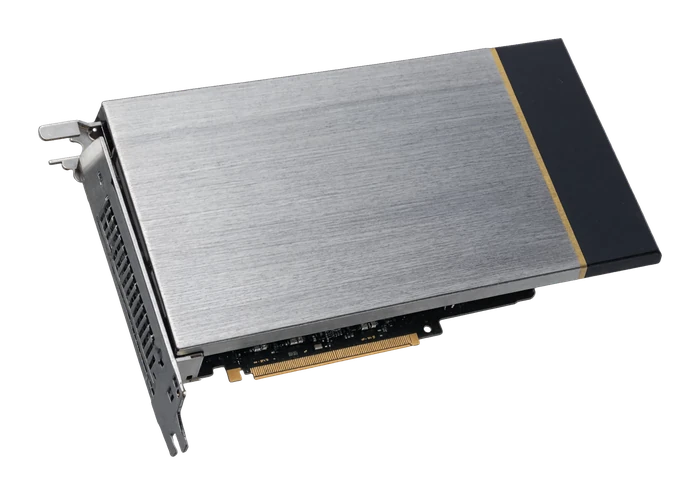
H100 PCIe on GPUBank
Eighty gigabytes of Hopper, by the second.
- 16 vCPU, 188 GB RAM, 1 TB NVMe, IPv4 and traffic in $1.35/hr
- Billed by the second after the health check
- Interruptible $0.81, reserved $1.08
 16 vCPU, 188 GB RAM, 1 TB NVMe, IPv4 and traffic in $1.35/hr
More GPU price guides
Where to rent the other cards at the cheapest price.
 B200 SXM180 GB HBM3eFrom $2.49 spot · $4.15 all-in
 H200 SXM141 GB HBM3eFrom $1.49 spot · $2.49 all-inH100 SXM80 GB HBM3From $1.11 spot · $1.85 all-in
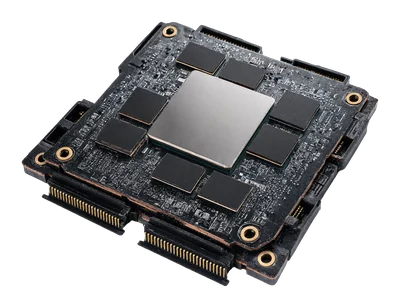 MI300X192 GB HBM3From $0.99 spot · $1.65 all-inRTX PRO 600096 GB GDDR7 ECCFrom $0.69 spot · $1.15 all-inA100 SXM80 GB HBM2eFrom $0.57 spot · $0.95 all-inL40S48 GB GDDR6 ECCFrom $0.33 spot · $0.55 all-in
 RTX 509032 GB GDDR7From $0.29 spot · $0.48 all-in
 RTX 409024 GB GDDR6XFrom $0.14 spot · $0.23 all-in