Updated 16 Oct 2026 · 35 offers checked
Where to rent an H100 SXM at the cheapest price
We read the H100 SXM offers on each provider's own page, priced what every hour really includes, and worked out the monthly bill, the cost per job and the point where buying an 8-GPU server would cost less than renting one.
Spot floor
$0.69
Vast.ai interruptible bid
Marketplace
$1.39
Lium, one GPU
GPUBank
$1.85
All-in, per second
Market median
$3.83
39 providers
AWS p5
$6.88
Per GPU of 8
Azure ND
$12.29
Per GPU of 8
The short answer, 16 Oct 2026
- $0.69/hrCheapest hour you can get. Vast.ai interruptible capacity on a single unverified host in California, at a minimum bid of $0.687 per GPU-hour; the machine pauses when someone outbids you, and disk and bandwidth are billed on top1. Nebius spot comes next, from $0.79 in eu-north12.
- $1.39/hrCheapest marketplace listing. A single H100 80GB HBM3 pod on the Lium marketplace in Secaucus, with 8-GPU nodes in Helsinki from $1.69 per GPU; listings appear and disappear as hosts come and go, and no persistent volume is included3.
- $1.85/hrCheapest managed price that includes the whole machine. GPUBank, with 20 vCPU, 125 GB of RAM, a 2 TB local NVMe disk, a public IPv4 and all traffic in the rate, billed per second, or about $1.37 effective after a $100 top-up and $1.16 after a $1,000 one4.
The H100 SXM has the longest price list of any GPU you can rent. GetDeploying tracked 57 providers and 445 price points for the H100 on 15 October 2026, with a median on-demand price of $3.83 per GPU-hour across the 39 providers that publish one5, and the spread around that median is enormous: the same hour of the same Hopper silicon cost $0.69 as an interruptible bid on Vast.ai1 and $12.29 per GPU on a Microsoft Azure ND H100 v5 virtual machine in East US6. Neither figure is wrong. Each one buys a different machine, a different meter and a different promise about what happens when a host fails, which is why the cheapest line on a pricing page so often turns into a bill that is not the cheapest at the end of the month. We read each offer on the provider's own page on 15 and 16 October 2026, and where a page could not be read we name the aggregator and its date.
A good part of the market moved in the three weeks before this page was written, and almost all of it moved up. Nebius raised its on-demand H100 from $3.85 to $4.50 on 1 October and switched its preemptible tier to a dynamic spot price from 8 October2; AWS now charges $5.97 per accelerator-hour for P5 Capacity Blocks in every region it lists7; Verda lists $4.178, Crusoe $4.509 and JarvisLabs $3.4910, all above the figures of late September, and CUDO Compute, which trackers still show at $1.79, now answers 'Quote on request' on its own pricing page11. GPUBank, which publishes this page, is one of the providers compared, on the same terms as the others: we say where it is cheapest and where a marketplace listing, a spot tier or a reservation elsewhere beats it.
01 / How the price fell
How the H100 hour fell, and why it stopped falling
The H100 entered the cloud at hyperscaler prices. Azure's ND H100 v5 has listed at $98.32 an hour for eight GPUs, $12.29 per GPU, since December 20236, and Silicon Data's series puts the hyperscaler median at about $7.76 per GPU-hour from August to December 2023, rising to $9.34 in the second half of 202441. The fall came first from below. The neocloud wave of 2024 put a median of $2.99 on specialised clouds and $2.58 on marketplaces between June and December 2024, and marketplace rates slid to $2.29 in the first five months of 2025 and $1.95 in the second half of the year41. SemiAnalysis' index of one-year H100 contracts, compiled from monthly surveys of more than 100 market participants, bottomed at about $1.70 per GPU-hour in October 202542.
The hyperscalers followed in June 2025, when AWS cut P5 on-demand prices by 44 percent from 1 June25, which brought the p5.48xlarge to $55.04 an hour, $6.88 per GPU24; Silicon Data's hyperscaler median dropped to $6.94 that month and to $6.26 in the second half of 202541. That was the bottom. By March 2026 the SemiAnalysis contract index had climbed to $2.35, a rise of almost 40 percent in six months42, Lambda raised its 8x H100 SXM rate from $2.99 to $3.99 on 9 June 202643, and in October Nebius moved from $3.85 to $4.50 and AWS Capacity Blocks reached $5.9727.
One H100 SXM hour, 2023 to October 2026Large cloudsSpecialised cloudsLow end of the market
Large clouds
- Oct 2023$7.76Silicon Data hyperscaler median, August to December 202341
- Dec 2023$12.29Azure ND96isr H100 v5 list price, $98.32 per 8-GPU VM, in force since 1 December 20236
- Sep 2024$9.34Silicon Data hyperscaler median, June to December 202441
- Jun 2025$6.88AWS p5.48xlarge on demand after the 44 percent cut of 1 June 2025, $55.04 per node25
- Oct 2026$6.88AWS p5.48xlarge on demand, us-east-1, $55.04 per node24
Specialised clouds
Low end
- Sep 2024$2.58Silicon Data marketplace median, June to December 202441
- Mar 2025$2.29Silicon Data marketplace median, January to May 202541
- Oct 2025$1.70SemiAnalysis one-year H100 contract index at its low42
- Mar 2026$2.35SemiAnalysis one-year H100 contract index, up almost 40 percent in six months42
- Oct 2026$1.39Cheapest single-GPU marketplace listing, Lium, 16 October 20263
Today the typical on-demand hour is far below the 2023 hyperscaler price but above the 2025 trough: GetDeploying's median was $3.83 across 39 providers on 15 October 20265, and Ornn's daily OCPI-H100 index, which moved between $2.49 and $3.21 over the previous month, settled at $3.13 that day44. The cheapest hours did not rise with the median. A single Lium pod at $1.393 and Vast.ai bids from $0.691 sit below even the 2025 marketplace median, which is the practical lesson of the chart: a cheap H100 hour is no longer a matter of waiting for the market to fall, but of choosing the seller, the terms and the risk you are willing to carry.
Why the large clouds look so expensive: one hour buys eight cards
02 / The card
What the H100 SXM is, and why one hour costs anything from $0.69 to $12.29
The H100 SXM is NVIDIA's Hopper datacenter GPU in its mezzanine form: 80 GB of HBM3 at 3.35 TB/s, NVLink at 900 GB/s between the GPUs of one server against 128 GB/s over PCIe Gen5, the FP8 Transformer Engine, 3,958 teraFLOPS of FP8 and 1,979 teraFLOPS of FP16 with sparsity, and a configurable power limit of up to 700 W12. The module does not plug into a PCIe slot. It sits on an HGX baseboard of eight GPUs inside a complete server, which is why the 8-GPU node, not the single card, is the unit in which the H100 SXM is built, bought and very often rented. Two other products carry the same name on price lists and should be kept apart from it: the H100 PCIe, a slower add-in card with HBM2e, and the H100 NVL, a 94 GB PCIe variant with 3.9 TB/s of bandwidth, a 350 to 400 W limit and NVLink at 600 GB/s between pairs12. GetDeploying notes that only about half of the providers it tracks label SXM explicitly, so a cheap 'H100 80GB' row may well be a PCIe card5.
The people who rent it are mostly teams fine-tuning or serving open models between 8B and 70B parameters, research groups that need a full NVLink node for days at a time, and inference operators who want FP8 and a mature software stack at a lower price than an H200 or a B200. That demand explains the crowd of sellers. The range from $0.69 to $12.29 comes from four differences that most comparisons blur: the unit sold (a single-GPU slice with a share of CPU and RAM, or an 8-GPU node with two server CPUs, up to 2 TB of memory and tens of terabytes of NVMe), the fabric between servers (100 Gbps Ethernet, or 3,200 Gbps of InfiniBand that only matters for jobs spanning several nodes), the commitment (on demand, interruptible, a week, a year or three), and the seller (a hyperscaler list price, a specialised cloud, or an independent host on a marketplace whose low prices often come with a short maximum rental and a modest reliability record).

03 / The price ladder
How to read an H100 SXM price list without comparing the wrong things
Six kinds of offer sit on the H100 SXM list, and each answers a different question. A managed on-demand cloud sells an instance at a fixed hourly price from its own fleet, with a stated amount of CPU, RAM and disk, and the thing to check is what the price leaves out: Runpod's $3.99 Secure Cloud pod includes 20 vCPU and 125 GB of RAM but not its volumes13, whereas Lambda's $3.99 per GPU on its 8x instance comes with 208 vCPU, 1,800 GiB of RAM and 22 TiB of SSD14. A peer-to-peer marketplace such as Vast.ai or Lium passes through a price set by an independent host, so two listings at the same price can be different machines in different countries with different disk and bandwidth charges13. Spot or interruptible capacity is the same hardware sold on the understanding that it can be taken back, at anything from $0.69 on Vast.ai to $2.08 at Verda18.
Reserved capacity is where the cheapest dependable hours are, but it is sold by the week, the month or the year, often by the whole node and often prepaid: Clore.ai's own dated snapshot quotes 8-GPU bare-metal contracts at $1.81 to $2.62 per GPU-hour with a 30-day minimum15, Together AI charges $3.19 for 91 to 180 days16 and DigitalOcean $3.26 on a 12-month contract17. Serverless platforms bill only while code runs, so Modal's $0.001097 per second, about $3.95 an hour for the GPU alone, can beat any always-on instance for a service that is busy a fraction of the day18. The large clouds, finally, sell the H100 SXM almost exclusively as 8-GPU instances, so their per-GPU price is the instance price divided by eight and one hour of it commits you to eight cards. The fair comparison is always like with like: a marketplace headline against another marketplace headline, and a managed all-in price against what the managed competitor charges once CPU, RAM, disk, IPv4 and traffic are added.
Managed on demandA fixed machine at one hourly price.
MarketplaceHosts set their own price; machines vary.
Spot and interruptibleCheaper hours that can be taken back.
ReservedCommitted for a term, paid either way.
ServerlessBilled by active seconds.
04 / Provider by provider
What each price buys, and what it leaves out.
The captures below were taken on 16 Oct 2026 from each provider's own H100 or pricing page, so every figure can be read next to the conditions printed beside it.
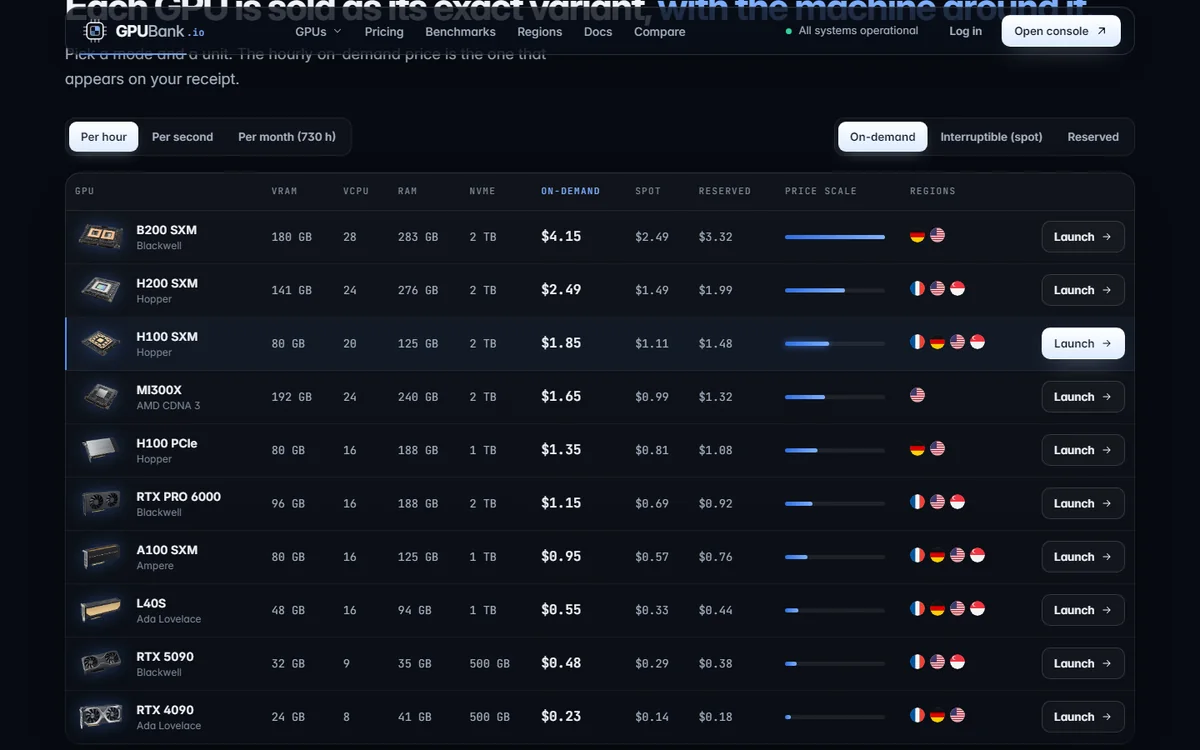
GPUBankAll-in
$1.85/hr
Managed cloud · 1 to 8 GPUs, NVLink
20 vCPU125 GB RAM2 TB NVMeIPv4 and all trafficSpot $1.11Reserved $1.48Persistent disk $0.03/GB-month
GPUBank sells the H100 SXM at $1.85 per GPU-hour with the whole machine in the price: 20 vCPU, 125 GB of RAM and a 2 TB local NVMe disk per GPU, a public IPv4 address and all inbound and outbound traffic, in machines of one to eight GPUs joined by NVLink at 900 GB/s4. Billing is per second with no minimum, the meter starts only after the machine passes its health check, and a stopped machine costs nothing but its persistent disk at $0.03 per GB-month. Interruptible capacity costs $1.11 with five minutes of notice and a stop rather than a deletion, and a week or a month reserved costs $1.48. It is offered in Paris, Frankfurt, Ashburn and Singapore, with a median of 48 seconds from launch to a healthy machine28. Payment is a prepaid balance topped up in crypto from $25, with bonuses that bring the effective hour to about $1.16 at $1,000; machines stop at eight GPUs, with no fabric between servers on offer.4
Checked 16 Oct 2026
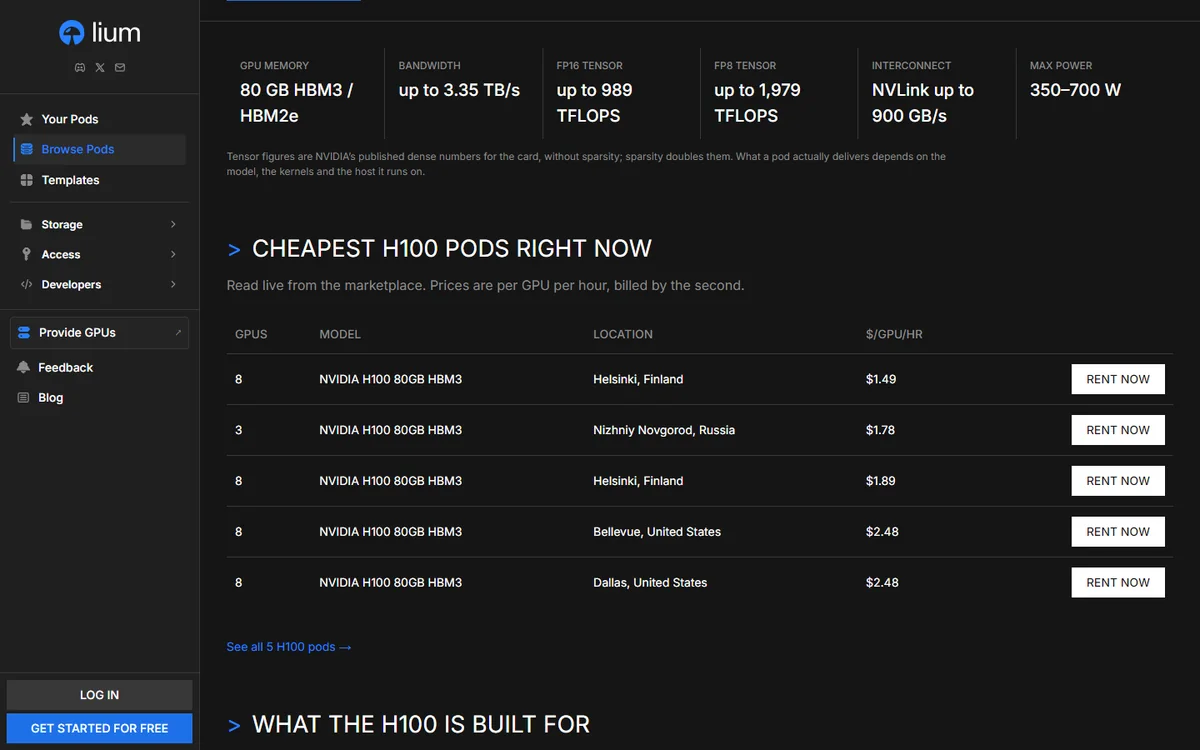
 Lium
$1.39/hr
Marketplace · single pods and 8-GPU nodes
Host CPU and RAM shareLocal disk of the node8x node from $1.69/GPUStock varies by the hour
Lium is the cheapest H100 marketplace we could read on the provider's own page. On 16 October its H100 page listed a single-GPU pod in Secaucus at $1.39 per GPU-hour and 8-GPU nodes in Helsinki at $1.69 and $1.89 per GPU, with another 8-GPU node in Bellevue at $3.753. The cards are listed as H100 80GB HBM3, the SXM memory, and the Helsinki nodes come with 128 Xeon Platinum 8468 cores and 1,575 GB of RAM. Each listing is an independent provider's machine, so the CPU, the disk, the uplink and the reliability score change from one to the next; one 3-GPU host in Russia is marked with a reduced power limit, which means less throughput for the same price. Stock is the catch: the listings changed between two readings on the same day, and GPU Finder records limited availability for Lium's single-GPU offers over 30 days45. We found no persistent volume in the price, so data has to be reloaded when a pod ends.3
Checked 16 Oct 2026
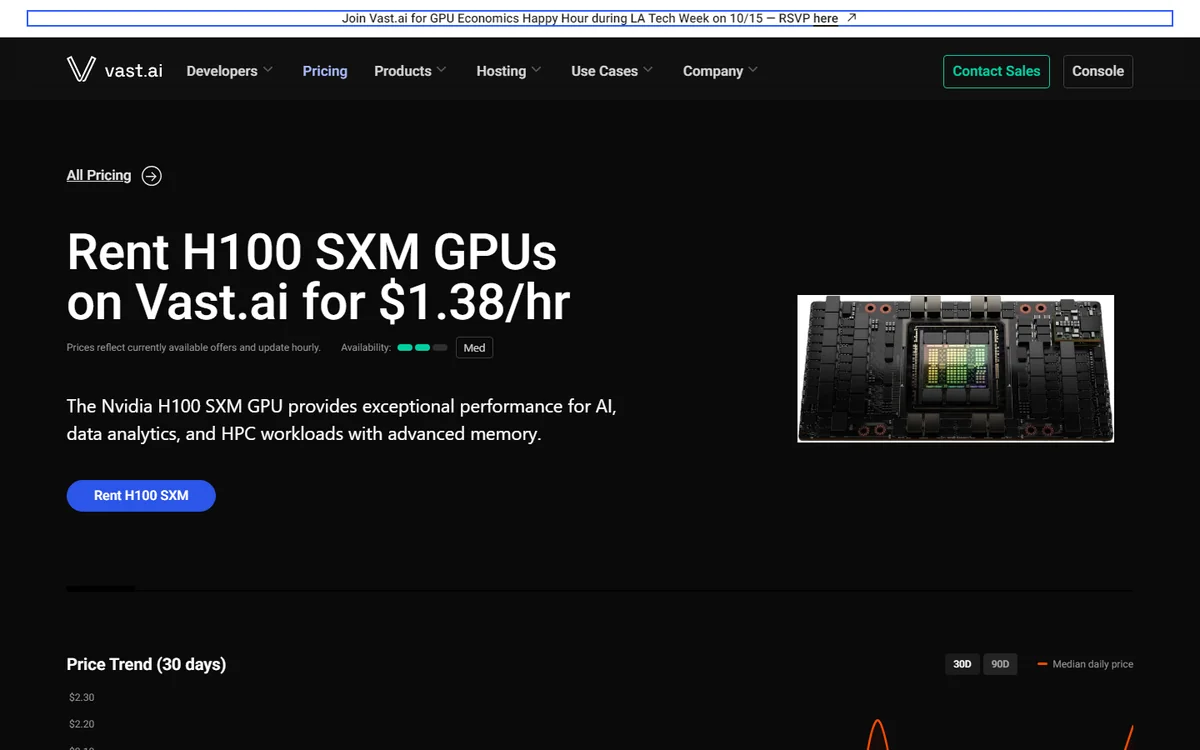
 Vast.ai
$2.00/hr
Marketplace · host-set prices
26 vCPU226 GB RAMUnverified host, CaliforniaInterruptible from $0.69Storage $0.20/GB-monthBandwidth per GB
Vast.ai is the deepest marketplace and the source of the cheapest H100 SXM hour on the market. Its public offer search returned 18 rentable H100 SXM offers on 16 October, the cheapest on demand at $2.00 per GPU-hour for one GPU on an unverified host in California with 26 vCPU and 226 GB of RAM, and the cheapest verified one at $2.13 in Germany1. The same California host accepts interruptible bids from $0.687, the lowest H100 SXM price we found anywhere. Vast's own H100 SXM page advertised 'from $1.38/hr' when we captured it, a headline it recalculates every hour from live offers without saying which offer it is, so it can point to a multi-GPU host or one that is already rented. Vast's model is a bid: an interruptible instance pauses when someone outbids you or an on-demand renter takes the machine, and storage keeps billing while an instance is stopped29. Each host sets its own storage price, $0.20 per GB-month on the cheapest one, and its own bandwidth price, about $0.004 per GB uploaded, so the headline is a floor rather than an all-in rate. Billing is per second from prepaid credit, and the reliability score shown on each listing is the first thing to filter on.1
Checked 16 Oct 2026
 Runpod
$2.69/hr
Community and Secure Cloud · 1 GPU
20 vCPU125 GB RAMSecure Cloud $3.99Network volume $0.07/GB-month
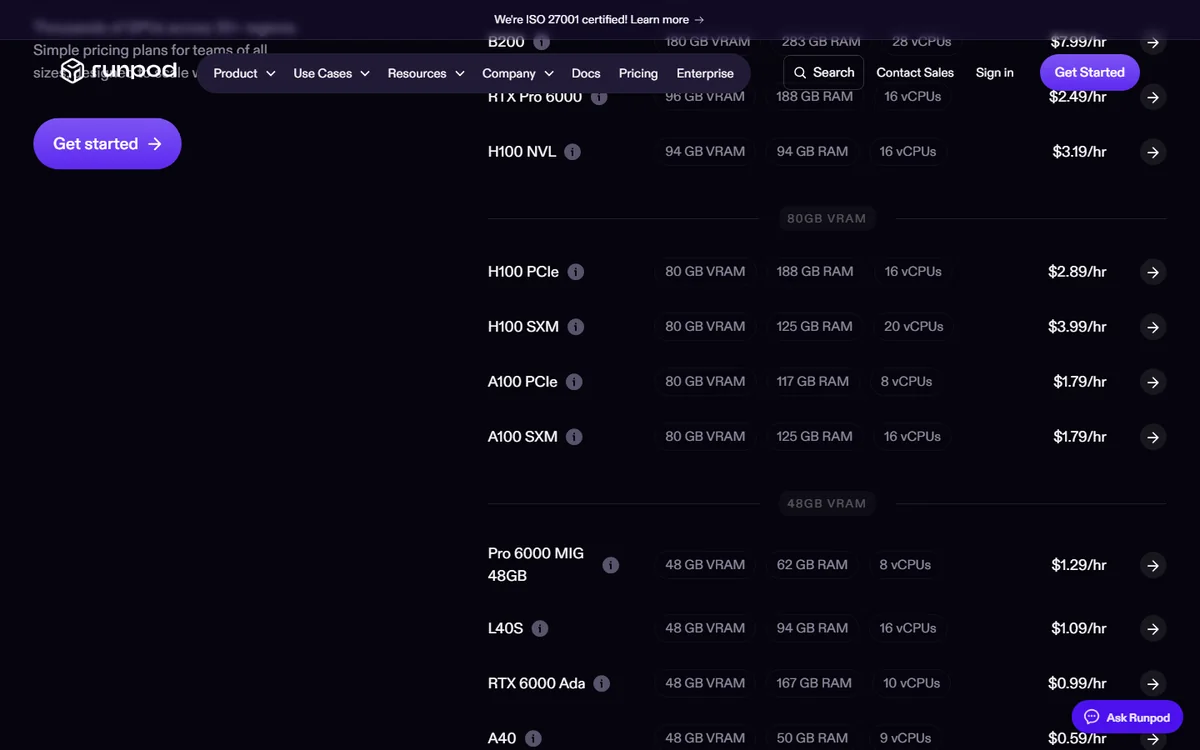
Runpod rents the H100 SXM in two clouds at two prices: $2.69 per hour on Community Cloud, where the machines belong to third-party hosts, and $3.99 on Secure Cloud13. Both pods come with 20 vCPU and 125 GB of RAM per GPU, and both are billed per second from a prepaid balance. The page keeps the variants apart, which many lists do not: the H100 PCIe costs $1.99 and $2.89, and the H100 NVL $2.59 and $3.19, so a cheap Runpod 'H100' in a tracker is often the PCIe card. Storage is billed separately, with network volumes at $0.07 per GB-month under 1 TB and a stopped pod's volume disk at $0.20, which keeps datasets and checkpoints between sessions without paying for a running GPU. Secure Cloud rose in September; trackers that still show $3.49 for it are out of date. For a single GPU, Runpod Community is the cheapest well-known managed-style option after the marketplaces, but it costs $0.84 an hour more than GPUBank's all-in rate before storage.13
Checked 16 Oct 2026
 Nebius
$4.50/hr
Managed cloud · eu-north1
vCPU and RAM per presetPer-second billingSpot from $0.79, dynamicDisks billed while stopped
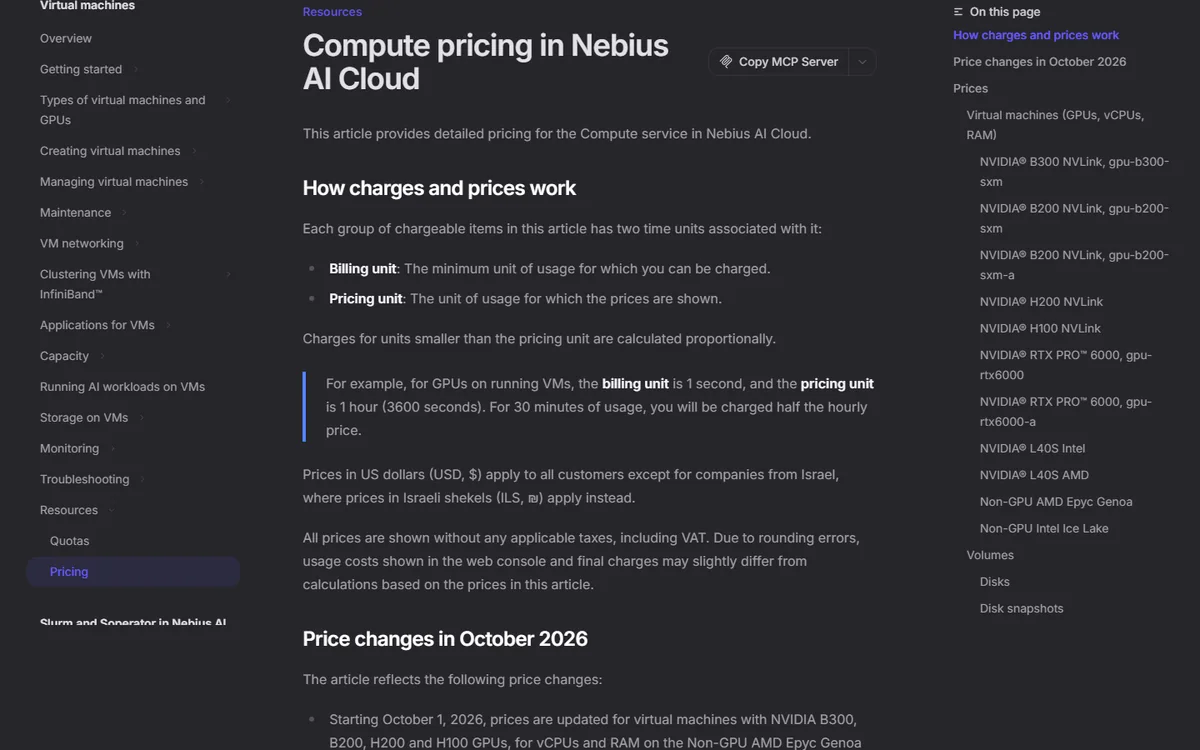
Nebius shows how fast H100 prices are moving in October 2026. Its documentation lists the H100 NVLink platform, available only in eu-north1, at $3.85 per GPU-hour before 1 October, $4.50 from that date, and a preemptible price that became dynamic on 8 October, quoted as 'from $0.79'2. The spot price can change as often as every 15 minutes, and the documented figure is the minimum, so the hour you actually pay depends on demand at the moment you start. Usage is billed per second against an hourly unit, and compute is not charged while a VM is stopped, although its disks are. For checkpointed batch work that can wait for a low spot price, Nebius is one of the cheapest H100 SXM hours in Europe; for steady on-demand use it is now among the more expensive specialised clouds, $2.65 an hour above GPUBank and level with Crusoe.2
Checked 16 Oct 2026
 Lambda
$3.99/hr
Managed cloud · 1x to 8x instances
208 vCPU per 8x1,800 GiB RAM22 TiB SSD1x at $4.291-Click Clusters $5.54 to $6.16
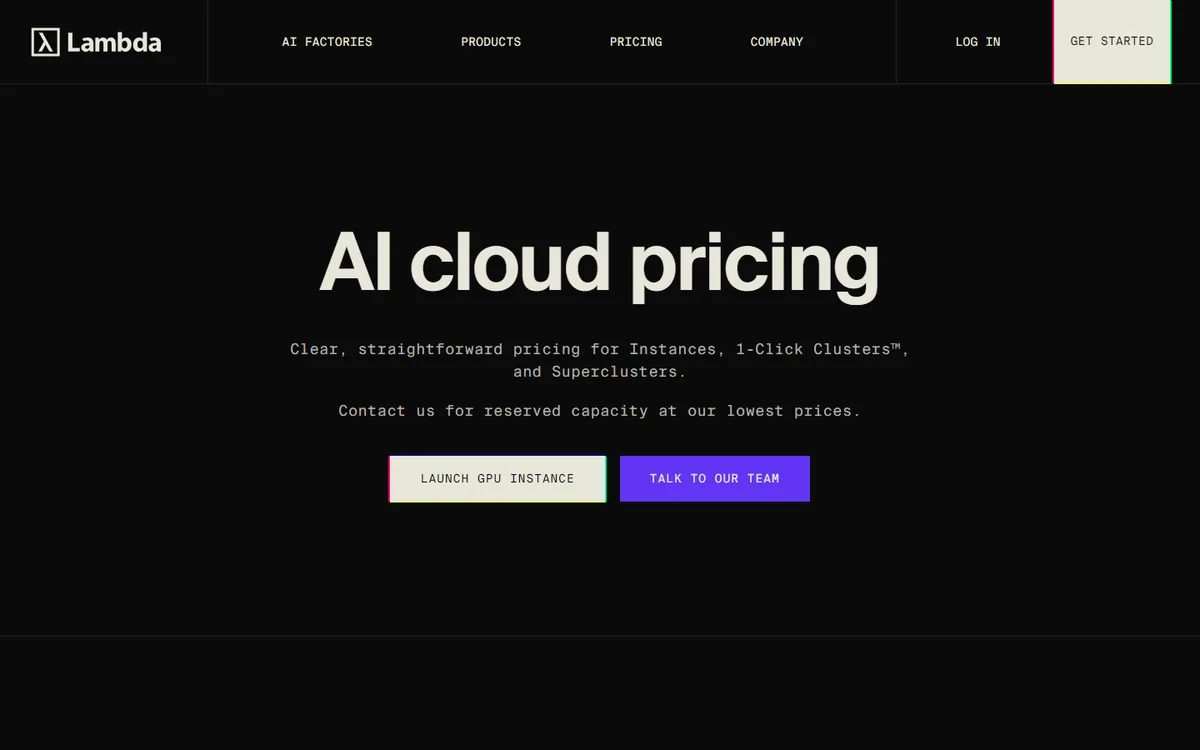
Lambda publishes one of the clearest H100 SXM price lists, with the per-GPU rate falling as the instance grows: $4.29 on a 1x instance with 26 vCPU, 225 GiB of RAM and 2.75 TiB of SSD, $4.19 on 2x, $4.09 on 4x and $3.99 on 8x, where the instance carries 208 vCPU, 1,800 GiB of RAM and 22 TiB of SSD, all plus applicable sales tax or VAT14. That $3.99 was $2.99 until June 2026, one of the clearest signs that the H100 market turned upward this year43. GetDeploying reported the SXM configurations out of stock on 15 October5. Lambda's strength is the step beyond one node: its 1-Click Clusters of 16 to 256 H100s on InfiniBand cost $6.16 to $5.54 per GPU-hour for terms of two weeks to a year14, which is the kind of offer a multi-node training run needs and that GPUBank does not sell.14
Checked 16 Oct 2026
Where GPUBank wins, and where it does not
On a managed, all-inclusive, per-second basis, GPUBank's $1.85 is the lowest H100 SXM price we could confirm on a provider's own page. The hour includes 20 vCPU, 125 GB of RAM, a 2 TB local NVMe disk, one public IPv4 and all inbound and outbound traffic, in machines of one to eight GPUs with NVLink at 900 GB/s, and the only other line a bill can carry is a persistent disk at $0.03 per GB-month4. The meter starts after the machine passes its health check, a failed launch is not billed, and a host failure during a job restarts the machine on a healthy host with the same disk and credits the interrupted session in full. Interruptible capacity costs $1.11 with five minutes of notice and a stop rather than a deletion, a week or a month reserved costs $1.48, and top-up bonuses bring the effective on-demand hour to about $1.54 with a $25 top-up, $1.37 with $100 and $1.16 with $1,0004. The card is offered in Paris, Frankfurt, Ashburn and Singapore, with a median of 48 seconds from launch to a machine that has passed its health check, and any Docker image or a ready template for vLLM, SGLang, Unsloth, Axolotl, ComfyUI or JupyterLab can be started on it28.
It loses on headline price to every spot tier below $1.11, Vast.ai's $0.69 bid and Nebius' dynamic price from $0.79 among them12, and to Lium's marketplace pods at $1.39 for one GPU or $1.69 per GPU on an 8-GPU node, as long as such a listing is there when you need it3. Its machines stop at eight GPUs and it lists no fabric between servers, so a job that must span 16 or 64 GPUs belongs on Lambda's 1-Click Clusters, Crusoe, Together AI or a hyperscaler, at two to four times the price per GPU-hour. Payment is a prepaid US dollar balance topped up in crypto from $25 to $5,000; card payments are not accepted for now, which rules GPUBank out for a buyer whose finance team can only pay by card or invoice, and the bonus only lowers the real price if the credit is actually spent, although the balance never expires4.
The rest of the market
Beyond the six providers profiled in detail, the managed tier is crowded and has mostly moved up. Voltage Park says on its own pricing page that one H100 can be rented for an hour from $1.99 without a contract, with no ingress, egress or support fees, while its Ethernet and InfiniBand configurations are priced on request19. GetDeploying shows UpCloud at $1.89 an hour and $1.88 spot, both out of stock and without a stated variant5. Hyperstack's H100 SXM page gives $3.20 on demand and reservations from $2.72, under a banner saying the card is only available through its Supercloud reservation, so treat the on-demand figure as a list price rather than a machine you can start today20. JarvisLabs charges $3.49 per minute-billed hour with 16 vCPU and 200 GB of RAM10, Verda $4.17 with 30 vCPU and 120 GB8, DigitalOcean $4.41 with 20 vCPU, 240 GiB, 5 TiB of scratch NVMe and 15,000 GiB of transfer17, and Crusoe and Nebius both $4.5092.
Together AI publishes $3.99 on demand and $1.99 preemptible for its HGX H100 clusters, with reservations from $3.69 for 3 to 30 days down to $3.19 for 91 to 180 days16. CoreWeave sells by the 8-GPU node, at $6.16 per GPU on demand on GetDeploying's reading, with spot from $2.465. HyperAI shows an H100 at $1.80 an hour on its own page, which would undercut most of the list, but the page does not say SXM or PCIe and links to a PCIe benchmark, so we leave it out of the SXM comparison21. Spheron lists $2.65 on demand and $2.20 spot per minute after a 20-minute minimum, again without naming the form factor22. CUDO Compute, often quoted at $1.79 for the GPU alone, now shows 'Quote on request' for the H100 SXM11.
Among marketplaces, Clore.ai's own page says per-minute listings start from $0.99 per GPU-hour at host-set prices, as of 21 September 2026, without stating whether the cheapest listing is an SXM or a PCIe card; its bare-metal contracts are the clearer offer, from $1.81 per GPU-hour on terms of 180 days or more in the USA, Slovenia and Japan15. Akash's own snapshot of 12 September put its live weighted-average H100 rate at about $2.71, for the GPU only, with CPU, memory, storage and IP priced in each provider's bid23. GetDeploying also records Novita at $1.70 spot and $3.39 on demand, TensorDock at $2.36, Denvr at $2.45 for 8-GPU nodes, Civo at $2.99 on demand and $2.49 on a 36-month term, and Thunder Compute at $3.20 but out of stock, none of which we could read on the provider's own page today5. The same tracker lists the cheapest reservations below GPUBank's on-demand rate, HyperAI at $1.53 for one month and a 48-month Vast.ai reservation at $1.62, both close to GPUBank's $1.48 reserved hour but on longer terms or an unstated form factor5.

The large clouds
The four large clouds sell the H100 SXM by the 8-GPU instance, and their list prices are three to seven times those of the specialised clouds. AWS's p5.48xlarge costs $55.04 an hour on demand in us-east-1, $6.88 per GPU, with 192 vCPU and 2,048 GiB of RAM, and EBS storage and egress on top24; that price dates from June 2025, when AWS cut P5 on-demand rates by 44 percent25. Google Cloud's a3-highgpu-8g lists at $88.49 an hour in us-central1, $11.06 per GPU26. Azure's Standard_ND96isr_H100_v5 costs $98.32 an hour for Linux in East US, $12.29 per GPU, a rate unchanged since December 20236. Oracle's price list charges $10.00 per GPU-hour for the H100 shape, $80 per node, the same in every public region27.
Commitments and spot change those figures sharply, which is how large customers actually pay. Azure's own price list puts its ND H100 v5 spot rate at $18.17 per VM-hour, $2.27 per GPU, and its one-year and three-year reservations at about $7.87 and $5.40 per GPU6. Google's a3-highgpu-8g spot price works out to $6.29 per GPU and its three-year committed-use price to about $4.8626, AWS's three-year reserved p5.48xlarge to about $2.97 per GPU24, and AWS Capacity Blocks, which reserve P5 capacity for a fixed window, cost $47.757 per instance-hour, $5.97 per accelerator, in every listed region, up from about $5.19 in US regions before the October revision, so a guaranteed P5 window now costs almost as much as the on-demand hour7. What these prices buy is integration with the rest of the cloud, compliance coverage, and large EFA, InfiniBand or RDMA clusters; for raw GPU-hours on one node they are rarely the cheap choice.
05 / Every offer
The whole comparison, sorted by kind and price.
| Provider | USD / GPU-hr | Kind | Unit | What the price includes | Billing | Stock | Basis |
|---|---|---|---|---|---|---|---|
| GPUBank | $1.85 | Managed on demand | 1 GPU | 20 vCPU, 125 GB RAM, 2 TB NVMe, IPv4, traffic | Per second | In stock | Provider page4 |
 Voltage Park | $1.99 | Managed on demand | 1 GPU | Starting price; no egress fees | Not stated | Not stated | Provider page19 |
 Hyperstack | $3.20 | Managed on demand | 1 GPU | List price; page says reservation only | Not stated | On request | Provider page20 |
 JarvisLabs | $3.49 | Managed on demand | 1 GPU | 16 vCPU, 200 GB RAM; storage extra | Per minute | Not stated | Provider page10 |
| Runpod Secure Cloud | $3.99 | Managed on demand | 1 GPU | 20 vCPU, 125 GB RAM; volumes extra | Per second | In stock | Provider page13 |
| Lambda | $3.99 | Managed on demand | 8-GPU node | 208 vCPU, 1,800 GiB RAM, 22 TiB SSD | Not stated | Sold out | Provider page14 |
 Together AI | $3.99 | Managed on demand | cluster | HGX H100 cluster; node not itemised | Not stated | Not stated | Provider page16 |
 Verda | $4.17 | Managed on demand | 1 GPU | 30 vCPU, 120 GB RAM | Not stated | Not stated | Provider page8 |
| Lambda | $4.29 | Managed on demand | 1 GPU | 26 vCPU, 225 GiB RAM, 2.75 TiB SSD | Not stated | Not stated | Provider page14 |
 DigitalOcean | $4.41 | Managed on demand | 1 GPU | 20 vCPU, 240 GiB RAM, 5 TiB scratch, 15,000 GiB transfer | Not stated | Not stated | Provider page17 |
| Nebius | $4.50 | Managed on demand | 1 GPU | vCPU and RAM per preset; eu-north1 | Per second | Not stated | Provider page2 |
 Crusoe | $4.50 | Managed on demand | 1 GPU | HGX H100; machine not detailed on the page | Not stated | Sold out | Provider page9 |
| Lium | $1.39 | Marketplace | 1 GPU | Host CPU, RAM and local disk | Per second | In stock | Provider page3 |
| Lium | $1.69 | Marketplace | 8-GPU node | 128 cores, 1,575 GB RAM, 895 GB disk | Per second | In stock | Provider page3 |
| Vast.ai | $2.00 | Marketplace | 1 GPU | 26 vCPU, 226 GB RAM; disk and bandwidth extra | Per second | In stock | Provider page1 |
| Runpod Community | $2.69 | Marketplace | 1 GPU | 20 vCPU, 125 GB RAM; volumes extra | Per second | Not stated | Provider page13 |
 Akash | $2.71 | Marketplace | 1 GPU | GPU only; rest in the provider bid | Lease | Not stated | Provider snapshot23 |
| Vast.ai | $0.687 | Spot and interruptible | 1 GPU | Minimum bid; pauses if outbid | Per second | In stock | Provider page1 |
| Nebius | $0.79 | Spot and interruptible | 1 GPU | Dynamic minimum, changes every 15 min | Per second | Not stated | Provider page2 |
| GPUBank | $1.11 | Spot and interruptible | 1 GPU | As on demand; 5 min notice, disk kept | Per second | In stock | Provider page4 |
| Together AI | $1.99 | Spot and interruptible | cluster | Preemptible HGX H100 | Not stated | Not stated | Provider page16 |
| Verda | $2.08 | Spot and interruptible | 1 GPU | 30 vCPU, 120 GB RAM | Not stated | Not stated | Provider page8 |
 Microsoft Azure | $2.27 | Spot and interruptible | 8-GPU node | ND96isr H100 v5 spot, East US | Not stated | Not stated | Provider page6 |
| GPUBank | $1.48 | Reserved | 1 GPU | Week or month, prepaid | Per term | In stock | Provider page4 |
 Clore.ai | $1.81 | Reserved | 8-GPU node | Bare metal, 180 days or more | Per term | On request | Provider snapshot15 |
| Hyperstack | $2.72 | Reserved | 1 GPU | Starting reservation price | Per term | On request | Provider page20 |
| Together AI | $3.19 | Reserved | cluster | 91 to 180 days | Per term | On request | Provider page16 |
| DigitalOcean | $3.26 | Reserved | 1 GPU | 12-month contract | Per term | On request | Provider page17 |
| Lambda 1-Click Clusters | $5.54 | Reserved | cluster | 256 GPUs on InfiniBand, 2 weeks to 1 year | Per term | On request | Provider page14 |
 AWS Capacity Blocks | $5.97 | Reserved | 8-GPU node | p5.48xlarge for a fixed window; EBS extra | Per term | Not stated | Provider page7 |
| AWS | $6.88 | Large clouds | 8-GPU node | p5.48xlarge, 192 vCPU, 2,048 GiB; EBS extra | Per second | Not stated | Aggregator24 |
 Oracle Cloud | $10.00 | Large clouds | 8-GPU node | BM.GPU.H100.8 bare metal | Not stated | Not stated | Provider page27 |
 Google Cloud | $11.06 | Large clouds | 8-GPU node | a3-highgpu-8g, us-central1 | Per second | Not stated | Aggregator26 |
| Microsoft Azure | $12.29 | Large clouds | 8-GPU node | ND96isr H100 v5, 96 vCPU, 1,900 GiB | Not stated | Not stated | Provider page6 |
 Modal | $3.95 | Serverless | 1 GPU | GPU only; CPU and RAM metered | Per second | Not stated | Provider page18 |
"Aggregator" rows could not be read on the provider's own page that day; "Provider snapshot" rows come from a page dated by the provider.
06 / The real monthly bill
What an H100 SXM hour really costs once storage, traffic and lost time are added
Storage is the most common line that the hourly rate hides. On Vast.ai each host sets a storage price that keeps running for as long as the instance exists, stopped or not; the cheapest H100 SXM host on 16 October charged $0.20 per GB-month, others up to $0.66129. Runpod bills network volumes at $0.07 per GB-month and a stopped pod's volume disk at $0.2013, Nebius stops charging for compute when a VM is stopped but keeps billing its disks2, and GPUBank charges only a persistent disk at $0.03 per GB-month, so 500 GB kept all month costs $154. Traffic is the second line. Vast.ai hosts bill bandwidth per gigabyte, the cheapest host at about $0.004 per GB of upload1, AWS and Google Cloud bill egress separately from their instances2426, and DigitalOcean includes 15,000 GiB of transfer before charging17. For an inference service sending 5 TB a month, these terms move the bill by anything from nothing to several hundred dollars.
Billing granularity decides what a short job costs. A job that runs 61 minutes costs 61 sixtieths of $1.85, or $1.88, on GPUBank, which bills per second with no minimum4; Nebius and Vast.ai also bill by the second229, JarvisLabs and Spheron by the minute, Spheron after a 20-minute minimum1022, and a cloud that bills each started hour charges the same job two hours, which doubles it. Prepaid balances add their own terms: Vast.ai, Runpod, Lium, Clore.ai and GPUBank all draw from credit bought in advance, so the questions are whether unused credit expires and what happens when the balance reaches zero. A reservation is the other prepaid form. At GPUBank, $1.48 divided by $1.85 is 0.80, so a reservation only beats on demand if the cards would otherwise run at least 80 percent of the reserved hours.
The last hidden cost is time you pay for and cannot use, and the question is who carries it. On a marketplace, a host that goes offline ends the session, everything since the last checkpoint is lost, and the renter pays for those hours; a reclaimed spot instance costs the work since the last checkpoint plus the time to relaunch elsewhere. A listing labelled 'H100' may also be slower than expected: Lium shows one 3x H100 host with a reduced power limit3, and in a public TensorRT-LLM issue a user who could not reproduce NVIDIA's documented throughput turned out to be running an H100 PCIe rather than the SXM the documentation used30. A short throughput test on any new listing, before committing a long job to it, is cheap insurance. GPUBank's terms put the cost of a host failure on the provider by crediting the interrupted session, and credit the last 30 minutes if a spot notice is missed4.

Three workloads, priced for a month
GPUBank spot
120 h GPU$133.20
Storage$15.00
OtherRework after a reclaim
Month$148.20
Checkpointed sessions at $1.11
All-inLium
120 h GPU$166.80
Storage$0.00
OtherData reloaded each session
Month$166.80
A $1.39 pod free when needed
GPUBank
120 h GPU$222.00
Storage$15.00
OtherNone
Month$237.00
On demand at $1.85, all-in
All-inVast.ai
120 h GPU$240.00
Storage$100.00
OtherBandwidth per GB
Month$340.00
$2.00 host, disk at $0.20/GB-month
Runpod Community
120 h GPU$322.80
Storage$35.00
OtherNone
Month$357.80
$2.69 pod, network volume at $0.07
GPUBank on demand costs 120 times $1.85, or $222, plus $15 for 500 GB of persistent disk, $237 in all, and paid from $1,000 top-ups credited as $1,600 it comes to about $148 of cash. Its interruptible tier brings the list price to $148.20 for checkpointed sessions. Lium's $1.39 pod is cheaper on compute, $166.80, but only when a listing is free at the moment you sit down, and with no persistent volume in the price the datasets are reloaded each time. Vast.ai's cheapest host costs $240 of GPU time, and because its storage at $0.20 per GB-month keeps billing for as long as the instance exists, 500 GB adds $100. Runpod Community at $2.69 with a $35 network volume comes to $357.80. At list prices the order is GPUBank interruptible, then Lium, then GPUBank on demand; Lium beats on-demand GPUBank only for a user who can work around marketplace stock and reload data each session, and loses that lead as soon as the GPUBank balance is bought in large top-ups.
Lium
730 h GPU$1,014.70
Storage$0.00
OtherHost risk for a month
Month$1,014.70
A $1.39 pod held for 730 hours
GPUBank reserved
730 h GPU$1,080.40
Storage$6.00
OtherNone, traffic included
Month$1,086.40
One month at $1.48, prepaid
All-inGPUBank
730 h GPU$1,350.50
Storage$6.00
OtherNone, traffic included
Month$1,356.50
On demand at $1.85
All-inVast.ai
730 h GPU$1,460.00
Storage$40.00
Other$19.53 for 5 TB upload
Month$1,519.53
$2.00 host, its own disk and bandwidth rates
Runpod Community
730 h GPU$1,963.70
Storage$14.00
OtherNone
Month$1,977.70
$2.69 pod, network volume at $0.07
Lambda 1x
730 h GPU$3,131.70
Storage$0.00
OtherSales tax or VAT
Month$3,131.70
$4.29 with 2.75 TiB SSD included
For a service that must stay up, a month reserved at GPUBank costs 730 times $1.48, or $1,080.40, plus $6 for 200 GB of disk, and the 5 TB of traffic is included, $1,086.40 in all against $1,356.50 on demand. Lium's $1.39 pod would cost $1,014.70 if one listing stayed online for a whole month, which is the assumption a production service should least like to make on a marketplace. Vast.ai's cheapest host comes to $1,460 of GPU time, $40 of disk at $0.20 per GB-month and about $19.53 for 5 TB at its upload rate, $1,519.53. Runpod Community costs $1,977.70 and Lambda's 1x instance $3,131.70 before tax. Spot is not a serious option for an endpoint, so the GPUBank reservation is the cheapest managed answer, and the on-demand rate wins instead only if the service runs less than 80 percent of the month.
GPUBank spot
1152 h GPU$1,278.72
Storage$60.00
OtherRework after a reclaim
Month$1,338.72
Checkpointed, single node at $1.11
All-inLium 8x
1152 h GPU$1,946.88
Storage$0.00
OtherHost risk
Month$1,946.88
$1.69 node free for both runs
GPUBank
1152 h GPU$2,131.20
Storage$60.00
OtherNone
Month$2,191.20
On demand at $1.85, NVLink node
All-inTogether AI spot
1152 h GPU$2,292.48
Storage$0.00
OtherStorage not priced
Month$2,292.48
Preemptible at $1.99
Lambda 8x
1152 h GPU$4,596.48
Storage$0.00
OtherSales tax or VAT
Month$4,596.48
$3.99 with 22 TiB SSD included
AWS Capacity Blocks
1152 h GPU$6,877.44
Storage$0.00
OtherEBS and egress extra
Month$6,877.44
$5.97 per accelerator-hour
On demand at GPUBank the two runs cost 1,152 times $1.85, or $2,131.20, plus $60 for a 2 TB persistent disk, $2,191.20 in all, and on its interruptible tier $1,338.72 if the job checkpoints often enough that a reclaim only costs a few minutes. Lium's 8-GPU node in Helsinki at $1.69 per GPU would cost $1,946.88, cheaper than GPUBank on demand, if the node is free for both runs and stays up for 72 hours each time. Together AI's preemptible clusters cost $2,292.48 before storage, Lambda's 8x instance $4,596.48 and AWS Capacity Blocks $6,877.44 before EBS. A GPUBank week reserved costs 8 times 168 times $1.48, or $1,989.12, so a reservation only pays if both runs fall in the same week. The answer changes as soon as a job needs more than one node: then the InfiniBand clusters of Lambda, Together AI or AWS are the only real choice, at two to four times the price per GPU-hour.
07 / Measured per job
What the H100 SXM delivers per job, measured rather than claimed
The H100 SXM is the right card for LoRA and full fine-tuning of models up to about 70B parameters on one 8-GPU node, for FP8 inference of 8B to 70B models, and for training that needs NVLink bandwidth between eight GPUs. It stops being the right card when the model and its KV cache no longer fit in 80 GB per GPU, which is where the 141 GB H200 or the 180 GB B200 saves both GPUs and time; when the job is small enough that HBM3 and NVLink sit idle, as with a 7B LoRA or speech transcription, which an A100 does for about half the price; and when a job spans many nodes, where the fabric between servers matters more than the card.
The cleanest training measurement is MLPerf Training's Llama 2 70B LoRA test, a fine-tune on the GovReport dataset at a sequence length of 8,192, timed to a fixed quality target. On one 8-GPU H100 node, NVIDIA's verified entry 4.1-0050 in MLPerf Training v4.1 finished in 27.93 minutes31, which is 3.72 GPU-hours, or $6.89 at GPUBank's on-demand rate. In v4.0 an 8-GPU H200 system finished in 24.7 minutes32, 3.29 GPU-hours or $8.20 at GPUBank's $2.49, and in v5.1 an 8-GPU HGX B200 system finished in 9.55 minutes33, 1.27 GPU-hours or $5.28 at $4.15. The B200 is the cheapest per job despite costing more than twice as much per hour, and the H200 is the most expensive per job on this test, because its gain in speed is smaller than its gain in price. A real project takes longer than the benchmark, since MLPerf uses a tuned NVIDIA stack, a modest dataset and a single successful run.
For serving, the cleanest cross-card measurement is MLPerf Inference v5.0, where NVIDIA's DGX H100 (entry 5.0-0057) served Llama 2 70B at 31,106 tokens per second in the server scenario and 31,307 offline, against 33,072 and 34,988 for NVIDIA's 8-GPU H200 system and 98,443 and 98,858 for the DGX B200, with both Hopper systems in FP8, the B200 in FP4, and TensorRT 10.8 and CUDA 12.8 throughout34. Divided by eight, the H100 makes about 14 million tokens an hour per GPU, $0.132 per million at GPUBank's $1.85, against $0.167 on the H200 at $2.49 and $0.094 on the B200 at $4.15. On a 70B model that fits on both Hopper cards, the H200's 6 percent more throughput does not pay for its 35 percent higher price, and the B200 is cheaper per token only when the stack runs in FP4.
For inference, NVIDIA's TensorRT-LLM performance overview, generated with trtllm-bench on the PyTorch backend at maximum load on synthetic data, reports 14,992 output tokens per second for Llama 3.1 8B in FP8 on a single H100 SXM at 1,000 input and 1,000 output tokens, 26,401 at 128 and 128, and 9,462 at 2,048 and 2,04835. At $1.85 an hour, 14,992 tokens per second is about 54 million tokens an hour, or $0.034 per million output tokens. Llama 3.3 70B in FP8 on two H100s with tensor parallelism of 2 reaches 4,181 tokens per second at 1,000 and 1,000, or about $0.25 per million on two GPUs at $3.70 an hour35. These are reference points under full batching, not what a single user sees, and a user who measured 15,897 tokens per second where the documentation for v0.20 expected 27,688 at 128 and 128 was told the gap came mainly from running a PCIe card30.
Verified MLPerf results: H100 entry 4.1-0050 (v4.1) and H200 (v4.0) from NVIDIA, GB200 entry 5.0-0071, HGX B200 from Nebius (v5.1). The H100 and H200 rows come from different rounds; NVIDIA's unverified June 2025 H200 figure of 21.84 minutes is not shown.31
MLCommons entries 5.0-0057 (DGX H100), 5.0-0060 (H200), 5.0-0056 (DGX B200), all NVIDIA. Offline: 31,307, 34,988, 98,858.34
NVIDIA reference figures at maximum load on an H100 SXM 80GB, page updated 15 September 2025 (commit 0c9430e). Not single-user speeds.35
MARKET MEDIAN
$3.83
On demand per GPU-hour, 39 providers, 15 Oct 2026
AWS P5 CUT
44 %
On-demand price reduction from 1 June 2025
CONTRACT REBOUND
+38 %
One-year H100 contracts, Oct 2025 to Mar 2026
08 / H200, B200 or A100
When an H200, a B200 or an A100 is the better rental per job
Per hour the H100 SXM sits in the middle of GPUBank's datacenter cards, at $1.85 against $0.95 for the A100 SXM, $1.35 for the H100 PCIe, $1.65 for the MI300X, $2.49 for the H200 SXM and $4.15 for the B200 SXM4. Per job the order changes: on the MLPerf Llama 2 70B LoRA fine-tune above, the B200 is the cheapest run and the H200 the dearest313233, so a team running large fine-tunes all month pays less on the more expensive card, and the MLPerf Inference v5.0 results give the same order for serving a 70B model: $0.094 per million tokens on the B200, $0.132 on the H100 and $0.167 on the H20034. The H200 earns its premium in memory rather than speed: with 141 GB of HBM3e at 4.8 TB/s, a 70B model in FP8 fits on one GPU with room for a long KV cache, where the H100 needs two GPUs or a shorter context.
At the other end, the A100 SXM at $0.95 has the same 80 GB but HBM2e at 2.0 TB/s and no FP8, so it remains the cheaper tool for small LoRA runs, embedding jobs and inference of models that run in 16-bit anyway, and the H100 PCIe at $1.35 suits single-GPU inference that never uses NVLink. The MI300X at $1.65 offers 192 GB of HBM3 at 5.3 TB/s, more memory per dollar than any NVIDIA card here, for teams whose stack runs well on ROCm. We did not find measured results for the A100, the H100 PCIe or the MI300X on the same benchmarks and settings, so we do not compute a cost per job for them.
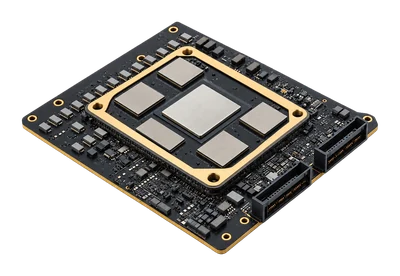
A100 SXM
80 GB HBM2e · 2.0 TB/s
$0.95/hr
LoRA and QLoRA fine-tuning, batch inference
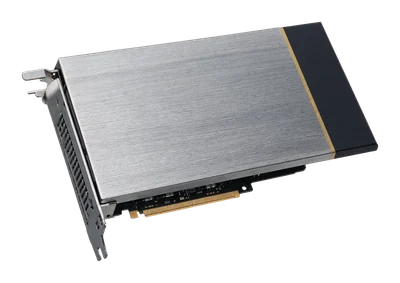
H100 PCIe
80 GB HBM2e · 2.0 TB/s
$1.35/hr
Single-GPU training and inference on a budget
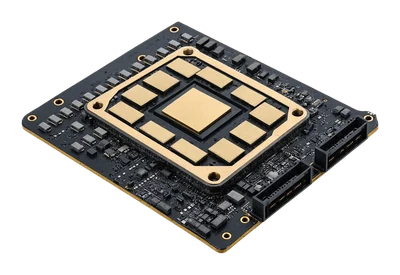
H100 SXM
80 GB HBM3 · 3.35 TB/s
$1.85/hr
AI training, fine-tuning and production LLM inference
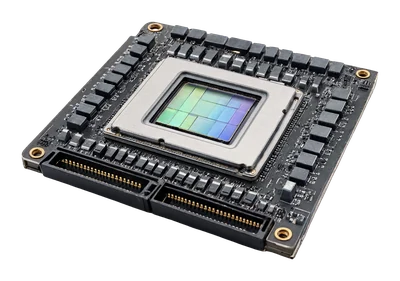
H200 SXM
141 GB HBM3e · 4.8 TB/s
$2.49/hr
Long-context LLM inference and fine-tuning above 70B
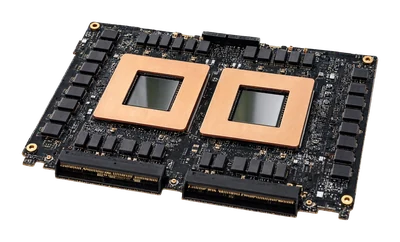
B200 SXM
180 GB HBM3e · 8 TB/s
$4.15/hr
Large-scale training and frontier model inference
GPUBank on-demand prices, all-in. Memory bar scaled to 180 GB.
09 / Rent or buy
Rent or buy an 8-GPU HGX H100 server
The realistic purchase unit for the H100 SXM is a whole 8-GPU HGX server, because the module only runs on an HGX baseboard. Mercatus, writing in July 2026, gives $250,000 to $320,000 for a new system with about $285,000 typical from the major OEMs36, and CloudZero gives the same range in its October 2026 update37. Used machines are cheaper and thinly traded: Rack Rate's index of 18 July 2026 showed a median of $250,000 for used, tested 8-GPU systems, in a range of $225,000 to $275,000, and $265,000 for refurbished ones with a 90-day warranty38. Mercatus' own resale estimates for a system after 36 months run from $62,000 to $146,000 counting the GPUs alone36, which shows how fast this value is falling as Blackwell ships.
For the arithmetic we take a new system at $285,000, worth 45 percent of that after two years, or $128,250, and add $2,000 a month for colocation, network, remote hands and spares, $48,000 over 24 months; all three are our assumptions, not quotes. The fixed cost is then $204,750 over 24 months, about $8,531 a month, and the money tied up in the server, at 8 percent a year on $285,000, adds about $1,900, for $10,431 a month. For power we take the roughly 10.2 kW peak per system in NVIDIA's DGX H100 specifications and SuperPOD design guide39 at the US commercial average of 13.97 cents per kWh for January to July 202640, about $1.42 per node-hour under load. Renting the same eight GPUs at GPUBank costs $14.80 per node-hour on demand, so owning would need 10,431 / (14.80 - 1.42) = 780 node-hours a month to break even, more than the 730 a month contains.
Leave the cost of capital out, as a buyer paying cash that would otherwise earn nothing may, and the break-even with on demand falls to about 638 node-hours, 87 percent of the month; against GPUBank's reserved rate, $11.84 per node-hour, it is about 819 hours and against the effective $9.25 of $1,000 top-ups about 1,090, so a new server never wins against either. A used system at $225,000 that resells for $90,000 lowers the cash-only threshold to about 570 node-hours, but the resale assumption moves everything: every 10 points of resale value on a $285,000 system changes the monthly cost by about $1,19038. Buy only if a team will keep an 8-GPU node busy more than nine hours in ten for two years against on-demand rates, already has power and rack space, and can carry the resale risk; everyone else pays less by renting, and least by renting reserved or prepaid capacity.
| Hours a month | Rent at $1.85 | Rent at $1.16 effective | Own | Cheaper |
|---|---|---|---|---|
| 100 | $1,480.00 | $925.00 | $10,573.74 | Rent |
| 200 | $2,960.00 | $1,850.00 | $10,716.24 | Rent |
| 300 | $4,440.00 | $2,775.00 | $10,858.73 | Rent |
| 400 | $5,920.00 | $3,700.00 | $11,001.23 | Rent |
| 500 | $7,400.00 | $4,625.00 | $11,143.72 | Rent |
| 600 | $8,880.00 | $5,550.00 | $11,286.21 | Rent |
| 730 | $10,804.00 | $6,752.50 | $11,471.46 | Rent |
Typical new OEM price, Mercatus (14 July 2026) and CloudZero (updated 9 October 2026). The $93,600 shown as host is 24 months of colocation and maintenance at $2,000 a month plus cost of capital at 8 percent a year ($45,600); resale at 45 percent is our assumption; power at the EIA US commercial average.
10 / What to choose
The cheapest H100 depends on the job.

You serve an 8B to 70B model around the clock
A reserved month, or a managed on-demand GPU
A month reserved at GPUBank costs $1.48 an hour with traffic included, and a production endpoint should not sit on a marketplace host that can disappear overnight.

You fine-tune in working sessions
An all-in on-demand GPU, or spot if you checkpoint
Per-second billing and a cheap persistent disk matter more than the headline rate when the GPU runs 120 hours a month and the data stays all month.

You train across more than one 8-GPU node
An InfiniBand cluster from Lambda, Together AI or a hyperscaler
NVLink stops at the edge of the server; beyond eight GPUs the fabric decides the speed, and only clusters sell it, at $5.54 to $6.16 per GPU-hour on Lambda.

You run short, restartable experiments
Spot or a marketplace listing
Vast.ai bids from $0.69 and Lium pods from $1.39 are the cheapest H100 hours there are, as long as losing a host costs you minutes rather than days.
11 / Questions
What people ask before renting one.
The cheapest H100 SXM hour on 16 October 2026 was an interruptible bid on Vast.ai at $0.687 per GPU-hour, on an unverified host in California that pauses your instance if someone outbids you1. Nebius' dynamic spot price starts at $0.79 in eu-north12. The cheapest hour that cannot be taken back was a single-GPU Lium marketplace pod at $1.39, with 8-GPU nodes from $1.69 per GPU, although listings come and go during the day3. Among managed clouds that fix the machine and put CPU, RAM, local disk, an IPv4 address and traffic in the price, the lowest we confirmed on a provider's own page is GPUBank at $1.85, billed by the second, or about $1.16 effective with a $1,000 top-up4. CUDO Compute, still shown at $1.79 by trackers, now quotes on request11.
An H100 SXM costs between about $0.69 and $12.29 per GPU-hour in October 2026, depending on who sells it and on what terms. GetDeploying's median on-demand price was $3.83 across 39 providers on 15 October5, and Ornn's daily OCPI-H100 index settled at $3.13 the same day44. The low end is spot and marketplace capacity: Vast.ai bids from $0.69, Nebius spot from $0.79 and Lium pods from $1.39123. Managed clouds run from GPUBank's all-in $1.85 through Runpod at $2.69 and $3.99 and Lambda at $3.99 to $4.29 up to Nebius and Crusoe at $4.5041314. The hyperscalers sit at the top, selling 8-GPU instances: AWS at $6.88 per GPU, Oracle at $10.00, Google Cloud at $11.06 and Azure at $12.292427266.
The H100 SXM is the fastest of the three and the one sold on 8-GPU HGX baseboards, with 80 GB of HBM3 at 3.35 TB/s, NVLink at 900 GB/s and a power limit of up to 700 W12. The H100 PCIe is a standard add-in card with 80 GB of slower HBM2e at about 2 TB/s and a much lower power limit, and it rents for less: $1.35 at GPUBank and $1.99 or $2.89 on Runpod413. The H100 NVL is a 94 GB PCIe card with 3.9 TB/s of bandwidth and NVLink at 600 GB/s between pairs, listed at $2.59 and $3.19 on Runpod. Many price lists label all three 'H100 80GB', and GetDeploying finds that only about half of providers state the form factor5, so check the variant on the provider's page or in nvidia-smi before comparing prices.
A marketplace H100 is the same silicon but not the same product. On Vast.ai, Lium, Clore.ai or Runpod Community Cloud, an independent host sets the price, the CPU, RAM and disk, the maximum rental length and often the storage and bandwidth fees, and the listing ends if that host goes offline29. Lium shows one H100 host with a reduced power limit and reliability scores from 64 to 96 percent on its nodes3, and Vast.ai shows a reliability score on every offer1. Marketplaces are the right choice for short, checkpointed or exploratory work where the lowest hourly rate matters most and a lost session costs little. A managed cloud is the safer choice for production inference, long jobs without frequent checkpoints, and anything where a lost night of compute costs more than the difference in price.
H100 SXM spot prices on 16 October 2026 started at $0.687 on a Vast.ai interruptible bid1 and $0.79 on Nebius, whose spot price has been dynamic since 8 October and can change every 15 minutes2. GPUBank's interruptible tier costs $1.11 with five minutes of notice4, Together AI's preemptible clusters $1.9916, Verda $2.088 and Azure's ND H100 v5 spot about $2.27 per GPU6. Spot is worth it for training and batch jobs that write checkpoints every 15 to 30 minutes and can resume on another machine, because a saving of 40 to 80 percent outweighs the occasional lost interval. It is not worth it for a service that must answer requests, or for jobs whose state is expensive to rebuild, where the hours lost to a reclaim quickly eat the discount.
You can rent a single H100 SXM from most specialised clouds, but Azure and Oracle sell their H100 SXM instances only by eight GPUs, and the AWS instance most buyers know, the p5.48xlarge, is also an 8-GPU unit, although Akash's September snapshot lists a single-GPU p5.4xlarge at about $6.886272423. GPUBank, Runpod, Lambda, Verda, JarvisLabs, DigitalOcean, Nebius, Vast.ai and Lium all rent a single GPU with a share of the host's CPU and RAM, at prices from $1.39 on a Lium pod to $4.41 on DigitalOcean317. Lambda charges more per GPU on small instances, $4.29 on 1x against $3.99 on 8x14, and some marketplaces price whole nodes lower per GPU than single pods. One H100 is enough to fine-tune with LoRA or serve models up to about 30B parameters in FP8; a 70B model in FP8 needs two GPUs for its weights and a useful cache, and full fine-tuning of 70B needs the whole 8-GPU NVLink node.
The hyperscalers charge $6.88 to $12.29 per H100 SXM GPU-hour on demand because they sell 8-GPU instances with very large CPU and RAM allocations, cluster networking, compliance coverage and integration with the rest of their cloud, and because their large customers pay through commitments rather than list prices24266. AWS's p5.48xlarge lists at $55.04 an hour, Google Cloud's a3-highgpu-8g at $88.49 and Azure's ND96isr H100 v5 at $98.32. Commitments narrow the gap: Azure's three-year reservation works out to about $5.40 per GPU6, Google's three-year committed use to about $4.8626, AWS's three-year reserved instance to about $2.9724, and AWS Capacity Blocks cost $5.977. Egress, billed separately on AWS and Google Cloud, adds to the bill of any inference service.
A LoRA fine-tune of Llama 2 70B as defined by MLPerf Training, on GovReport at a sequence length of 8,192 to a fixed quality target, took 27.93 minutes on one 8-GPU H100 SXM node in NVIDIA's verified v4.1 entry31. That is 3.72 GPU-hours, or about $6.89 at GPUBank's $1.85 on-demand rate4. A real project takes longer, because MLPerf uses a tuned NVIDIA stack, a modest dataset and a single successful run, while real work adds data preparation, evaluation and repeated attempts; multiplying the benchmark by 5 to 20 for a first real run puts a 70B LoRA project in the range of tens to a few hundred dollars of H100 time. On a B200 node the same benchmark costs about $5.28 at GPUBank's prices, and on an H200 node about $8.203332.
Per job, the B200 often costs less than the H100 despite its higher hourly price, and the H200 usually costs more. At GPUBank's prices, the MLPerf Llama 2 70B LoRA fine-tune costs $6.89 on an 8-GPU H100 node at $1.85 per GPU, $8.20 on an H200 node at $2.49 and $5.28 on an HGX B200 node at $4.15, because the B200 finished in 9.55 minutes against 27.93 for the H100 and 24.7 for the H200313233. The H200's advantage is memory: 141 GB of HBM3e lets a 70B model in FP8 run on one GPU with a large KV cache, which matters for long contexts and many concurrent users. The A100 at $0.95 remains the cheapest tool for small LoRA jobs that do not use FP84.
Buying an 8-GPU HGX H100 server is cheaper than renting only for a node kept busy almost all the time for two years, and then only if the money tied up in it costs you nothing. A new system costs about $285,0003637; at 45 percent resale after 24 months, $2,000 a month for colocation and maintenance, 8 percent a year on the capital and power at the US commercial average, owning costs about $10,431 a month plus $1.42 per node-hour, or about $11,470 at full use. Renting the same eight GPUs at GPUBank costs $10,804 a month on demand, $8,643 reserved by the month and about $6,753 at the effective price of $1,000 top-ups440. Without the cost of capital, owning beats on demand above about 638 node-hours, 87 percent of the month, and never beats the reservation or the top-up rate. Used systems sold for a median of $250,000 in July 2026 and refurbished ones with a 90-day warranty for $265,00038, but the resale value of an H100 server two years from now is the largest uncertainty in the sum.
H100 rental prices fell from 2023 to late 2025 and have been rising since. Silicon Data's series puts the hyperscaler median near $7.76 per GPU-hour in late 2023 and $9.34 in late 2024, and the marketplace median at $1.95 in the second half of 202541; AWS cut P5 on-demand prices by 44 percent in June 202525, and SemiAnalysis' one-year contract index bottomed at about $1.70 in October 202542. In 2026 that index rose to $2.35 by March, Lambda raised its 8x H100 SXM rate from $2.99 to $3.99 in June43, Nebius went from $3.85 to $4.50 on 1 October2 and AWS Capacity Blocks reached $5.977. Cheap hours still exist, on marketplaces, spot tiers and smaller clouds, but they come from choosing the seller rather than from a general fall.
A stopped H100 instance usually costs its storage, and on some offers much more. GPUBank charges only the persistent disk at $0.03 per GB-month, so 500 GB kept for a month costs $154. Nebius stops charging compute when a VM is stopped but keeps billing its disks2. On Vast.ai the instance's storage keeps billing for as long as the instance exists, at a rate each host sets, $0.20 per GB-month on the cheapest H100 SXM host on 16 October and up to about $0.66 on others129. Runpod bills a stopped pod's volume disk at $0.20 per GB-month and network volumes at $0.0713. On bare-metal servers rented by the node, the whole machine usually keeps billing until it is released, so check which lines keep running before you stop rather than delete, and move large datasets to a cheap volume if the GPU will sit idle for days.
Yes, at a few providers. GPUBank is paid only from a prepaid US dollar balance topped up in crypto, with Bitcoin, Ethereum, USDT, USDC, Monero and more than a dozen other coins accepted for top-ups of $25 to $5,000, and its bonus of 20 to 60 percent brings the effective H100 SXM hour to about $1.54 with $25, $1.37 with $100 and $1.16 with $1,0004. The balance never expires, every account and team member can have a monthly spend cap, and cards are not accepted for now. Several marketplaces, including Vast.ai, Lium and Clore.ai, also work from prepaid credit29315, while the large clouds and most managed providers bill a card or an invoice. A top-up bonus is a discount only on credit you actually spend, so size it to the hours you expect to use.
Sources
Sources
- 01Vast.ai, public offer search API (H100 SXM, rentable offers)Cheapest on-demand and interruptible H100 SXM offers, host storage and bandwidth rates · read 16 Oct 2026
- 02Nebius documentation, Compute pricingH100 NVLink on demand and spot prices by effective date, billing · read 16 Oct 2026
- 03Lium, H100 GPUsLive H100 pods and nodes, prices per GPU-hour · read 16 Oct 2026
- 04GPUBank, pricing (updated 15 October 2026)GPUBank rates for all cards, inclusions, billing, top-up bonuses · read 16 Oct 2026
- 05GetDeploying, Nvidia H100 rental prices (data of 15 October 2026)Median on-demand price, provider count, aggregator rows for UpCloud, CoreWeave, Novita, Civo, Denvr, TensorDock, Thunder Compute · read 16 Oct 2026
- 06Azure Retail Prices API, Standard_ND96isr_H100_v5, East USOn-demand, spot and reservation prices with effective dates · read 16 Oct 2026
- 07AWS, EC2 Capacity Blocks for ML pricing$47.757 per instance-hour, $5.970 per accelerator-hour for p5.48xlarge in every listed region · read 16 Oct 2026
- 08Verda, pricingH100 SXM5 on demand and spot rates · read 16 Oct 2026
- 09Crusoe Cloud, pricingH100 on-demand rate · read 16 Oct 2026
- 10JarvisLabs, pricingH100 SXM rate, machine, per-minute billing · read 16 Oct 2026
- 11CUDO Compute, pricingH100 SXM quote on request · read 16 Oct 2026
- 12NVIDIA H100 Tensor Core GPUH100 SXM and NVL specifications · read 16 Oct 2026
- 13Runpod, pricingH100 SXM, PCIe and NVL rates on Community and Secure Cloud · read 16 Oct 2026
- 14Lambda, GPU cloud pricingH100 SXM 1x to 8x instance rates, 1-Click Cluster rates · read 16 Oct 2026
- 15Clore.ai, Rent H100 (snapshot of 21 September 2026)Marketplace starting price, bare-metal contract rates and terms · read 16 Oct 2026
- 16Together AI, pricingHGX H100 on demand, preemptible and reserved rates · read 16 Oct 2026
- 17DigitalOcean, GPU Droplets pricingH100 on demand and 12-month rates, machine, transfer · read 16 Oct 2026
- 18Modal, pricingH100 per-second rate, CPU and memory rates · read 16 Oct 2026
- 19Voltage Park, pricingH100 starting price, no egress fees · read 16 Oct 2026
- 20Hyperstack, NVIDIA H100 SXMOn-demand and reservation prices, reservation-only banner · read 16 Oct 2026
- 21HyperAI, pricingH100 at $1.80, variant not stated · read 16 Oct 2026
- 22Spheron, GPU rentalH100 on demand and spot rates, 20-minute minimum · read 16 Oct 2026
- 23Akash Network, The Bid: H100 rental price 2026 (checked 12 September 2026)Akash weighted-average H100 rate · read 16 Oct 2026
- 24Vantage, p5.48xlarge pricing (from AWS price data)On-demand, spot and three-year reserved price, specifications · read 16 Oct 2026
- 25AWS News Blog, up to 45% price reduction for EC2 NVIDIA GPU instances (5 June 2025)44 percent P5 on-demand cut from 1 June 2025 · read 16 Oct 2026
- 26gcloud-compute.com, a3-highgpu-8g (from Google Cloud SKU data, updated 11 October 2026)On-demand, spot and committed-use prices in us-central1 · read 16 Oct 2026
- 27Oracle Cloud price list API, Compute GPU H100 (part B98415)$10.00 per H100 GPU-hour, pay as you go · read 16 Oct 2026
- 28GPUBank, home pageRegions, templates, median launch time, host failure credit · read 16 Oct 2026
- 29GetDeploying, Vast.ai review and pricingVast.ai billing model, storage billed while stopped · read 16 Oct 2026
- 30GitHub, NVIDIA/TensorRT-LLM issue 6294Reproduction gap attributed to an H100 PCIe · read 16 Oct 2026
- 31NVIDIA Technical Blog, Blackwell in MLPerf Training v5.0Llama 2 70B LoRA, 8x H100 27.93 min (4.1-0050), GB200 11.14 min (5.0-0071) · read 16 Oct 2026
- 32NVIDIA Technical Blog, MLPerf Training v4.0 recordsLlama 2 70B LoRA, 8x H200 24.7 min · read 16 Oct 2026
- 33Nebius, MLPerf Training v5.1 resultsLlama 2 70B LoRA, 8x HGX B200 9.55 min · read 16 Oct 2026
- 34MLCommons, MLPerf Inference v5.0 results (summary_results.json)Closed datacenter entries 5.0-0057 (DGX H100), 5.0-0060 (H200), 5.0-0056 (DGX B200): Llama 2 70B, TensorRT 10.8 · read 16 Oct 2026
- 35NVIDIA TensorRT-LLM, performance overviewLlama 3.1 8B and Llama 3.3 70B FP8 throughput on H100 SXM · read 16 Oct 2026
- 36Mercatus, NVIDIA H100 server price 2026 (14 July 2026)New 8-GPU HGX H100 price range and typical price, resale estimates · read 16 Oct 2026
- 37CloudZero, Nvidia H100 price in 2026 (updated 9 October 2026)New 8-GPU HGX H100 price range · read 16 Oct 2026
- 38Rack Rate, HGX H100 SXM5 server, used and refurbished (18 July 2026)Used and refurbished 8-GPU system prices · read 16 Oct 2026
- 39NVIDIA DGX SuperPOD data center design (H100), electrical specificationsPeak demand of 20.4 kW per circuit for four DGX H100, about 10.2 kW per system · read 16 Oct 2026
- 40EIA, Electric Power Monthly, table 5.3US commercial average 13.97 cents per kWh, January to July 2026 (preliminary) · read 15 Oct 2026
- 41Silicon Data, H100 rental price over time (2023 to 2025)Hyperscaler, neocloud and marketplace medians by period · read 16 Oct 2026
- 42Tiger Newspress, Nvidia H100 rental costs jump nearly 40% over six months: SemiAnalysis (3 April 2026)One-year contract index, $1.70 in October 2025 and $2.35 in March 2026 · read 16 Oct 2026
- 43UsagePricing, Lambda pricing history8x H100 SXM raised from $2.99 to $3.99 on 9 June 2026 · read 16 Oct 2026
- 44Ornn, OCPI-H100 indexDaily H100 SXM index, $3.13 on 15 October 2026 · read 16 Oct 2026
- 45GPU Finder, H100 cloud pricingAvailability of Lium's H100 listings over 30 days · read 16 Oct 2026
What we could not confirm
Several figures rest on something other than the provider's own pricing page, and are labelled so. Vast.ai's pricing page renders its prices in the browser and showed no figure to our reader, so its offers come from its public search API on 16 October, which returns live listings that can change within minutes. The AWS on-demand, spot and reserved figures come from Vantage and the Google Cloud figures from gcloud-compute.com, both built on the providers' price data, because the AWS and Google pricing pages load their tables by script; the Azure and Oracle prices come from their official price APIs. UpCloud, CoreWeave, Novita, Civo, Denvr, TensorDock and Thunder Compute appear only through GetDeploying. Lium's listings changed between two readings on the same day, so its $1.39 and $1.69 are moments rather than standing prices. HyperAI's $1.80 and Spheron's $2.65 do not state the form factor and were left out of the SXM comparison, and CUDO Compute now quotes on request. Stock on the day is confirmed only where the table says so; most providers do not show live availability without an account. The Silicon Data, SemiAnalysis and Ornn history figures are their own index methods and are not directly comparable with one another. In the rent or buy sum, resale value, colocation and maintenance are our assumptions, the 10.2 kW power figure is derived from NVIDIA's rack design guide rather than measured, and the electricity price is the EIA US commercial average for January to July 2026. The H100 and H200 LoRA times come from different MLPerf rounds, v4.1 and v4.0, so their cost-per-job comparison carries that caveat. No measured results on the same benchmarks were found for the A100, H100 PCIe or MI300X.
H100 SXM on GPUBank
One H100, not eight, billed by the second.
- 20 vCPU, 125 GB RAM, 2 TB NVMe, IPv4 and traffic in $1.85/hr
- Billed by the second after the health check
- Interruptible $1.11, reserved $1.48
 20 vCPU, 125 GB RAM, 2 TB NVMe, IPv4 and traffic in $1.85/hr
More GPU price guides
Where to rent the other cards at the cheapest price.
B200 SXM180 GB HBM3eFrom $2.49 spot · $4.15 all-inH200 SXM141 GB HBM3eFrom $1.49 spot · $2.49 all-inH100 PCIe80 GB HBM2eFrom $0.81 spot · $1.35 all-in MI300X192 GB HBM3From $0.99 spot · $1.65 all-in
 RTX PRO 600096 GB GDDR7 ECCFrom $0.69 spot · $1.15 all-inA100 SXM80 GB HBM2eFrom $0.57 spot · $0.95 all-in
 L40S48 GB GDDR6 ECCFrom $0.33 spot · $0.55 all-in
 RTX 509032 GB GDDR7From $0.29 spot · $0.48 all-in
 RTX 409024 GB GDDR6XFrom $0.14 spot · $0.23 all-in